


You walked away from the crash feeling mostly fine. Maybe you were sore that night, maybe not at all. Now, a few days or even a couple of weeks later, your neck is stiff, headaches keep coming back, or something just feels off.
That’s common, and it’s worth taking seriously. Many crash injuries don’t announce themselves right away, and some of the symptoms that show up later point to injuries that need care.
This guide covers what delayed symptoms can look like, when they tend to appear, what they may mean, and who to see. If your crash just happened, start with what to do in the first 72 hours after a car accident.
Key Takeaways
Whiplash symptoms usually begin within days of the injury, and some take a full day or more to fully appear.
Concussion symptoms can surface hours or days after a crash and can change over the following week or two.
Pain that spreads into an arm or leg, or numbness, tingling or weakness, may mean nerve involvement and should be checked.
Seat belt bruising with belly pain, or trouble controlling bladder or bowels, needs emergency care right away.
Emotional symptoms like anxiety about driving can start weeks or even months after a crash.
Why Some Crash Injuries Don’t Hurt Right Away

A driver holds his head and neck after a rear-end collision, a common cause of whiplash.
Right after a crash, your body is in high-alert mode. As Hartford HealthCare explains it, adrenaline can mask pain at first, and as your body calms down, inflammation and muscle tightness begin to build. That’s why the next 24 to 48 hours deserve attention, and why pain that gets worse or spreads shouldn’t be brushed off.
Timing also depends on the injury. Cleveland Clinic notes that some whiplash symptoms can show up immediately after a crash, others take at least 12 hours, and it can take a day or a few days for the full picture to appear.
Other symptoms are easy to miss for a different reason. According to the CDC, people with a concussion may not recognize or admit something is wrong, and the signs can be missed by family members and even healthcare providers.
Delayed Symptom Timeline: What Shows Up When
Every injury is different, but research gives a rough picture of when symptoms tend to appear.
The first hours to few days
This is when most neck and back symptoms appear. Mayo Clinic says whiplash symptoms most often start within days, with neck pain and stiffness, pain that gets worse when you move your neck, and reduced range of motion. Concussion symptoms can also start in this window: the CDC notes that some appear right away while others take hours or days.
One to two weeks later
Some symptoms change as you recover. The CDC describes headaches and nausea as more likely early on, while feeling more emotional than usual or having trouble sleeping may show up a week or two after the injury.
Weeks to months later
Emotional effects can take longer. NIMH reports that symptoms of post-traumatic stress disorder (PTSD) usually begin within three months of a traumatic event, though they sometimes appear later.
Delayed Symptoms by Type and What They May Mean
Neck and upper back pain

A stiff, sore neck, one of the most common whiplash symptoms in the days after a crash.
Rear-end crashes are the most common cause of whiplash, according to Mayo Clinic. Whiplash happens when your head is thrown backward and then forward with force, straining the muscles and tissues of the neck. Besides neck pain, it can cause headaches that start at the base of the skull, pain in the shoulders or upper back, tiredness and dizziness.
Some people also have blurred vision, ringing in the ears, trouble sleeping, irritability, trouble focusing, memory problems or depression. Learn how we approach whiplash after a car accident.
Low back pain and pain that travels down a leg

Lower back pain that can spread into the hip and leg after a crash.
A crash can also affect your lower back. When pain starts in the back or neck and then travels into an arm or leg, it may involve an irritated nerve. Pain that runs down the back of the leg is often called sciatica. Mayo Clinic says a herniated disk can cause numbness or tingling that radiates into the area the nerve serves, and recommends calling a healthcare professional if back or neck pain spreads to an arm or leg. Read more about disc injuries and sprains and strains.
Numbness, tingling or weakness

Numbness or tingling in the hands can come with neck injuries after a crash.
Cleveland Clinic lists numbness and burning, tingling or “pins and needles” feelings in the neck, upper back, shoulders or upper arms among whiplash symptoms. A herniated disk in the neck typically causes the most pain in the shoulder and arm, and weakness can make you drop things or feel unsteady when walking. Any new numbness or tingling after a crash should be evaluated.
Headaches

A headache that won’t let up in the days after a crash.
Headaches are one of the most common delayed complaints after a crash. They can come from the neck (whiplash headaches often start at the base of the skull) or from a concussion. Because the causes differ and a worsening headache can be a danger sign, a headache that’s new since the crash should be checked, not waited out.
Jaw pain or clicking

Aching along the side of the face and jaw after a crash.
Jaw pain is one of the less obvious crash symptoms. Cleveland Clinic notes that whiplash neck pain can spread to the face. Research is mixed, but a 2013 systematic review found reported rates of jaw pain after whiplash ranging from about 2% to 52%, and concluded there is some evidence that jaw pain is more common after whiplash. A more recent meta-analysis found jaw pain was already common soon after whiplash and didn’t seem to decrease over time. If chewing, yawning or opening your mouth hurts since the crash, mention it at your exam.
Dizziness and balance problems

Dizziness and feeling off-balance, symptoms linked to both whiplash and concussion.
Dizziness can come with whiplash, and the CDC also lists dizziness and balance problems among concussion symptoms. Since the cause can vary, don’t guess. Get it evaluated, especially if it’s getting worse.
Trouble thinking, remembering or concentrating

Feeling foggy or forgetful, which can be a sign of concussion.
You don’t have to hit your head to get a concussion. The CDC describes concussion as possible after a bump, blow or jolt to the head or body. Feeling foggy, confused, or having trouble with memory or concentration after a crash can be signs of a concussion and should be seen by a physician.
Anxiety, nightmares or avoiding the car

Anxiety behind the wheel, an emotional effect that can follow a crash.
Not every delayed symptom is physical. NIMH describes avoidance as one type of PTSD symptom, and gives the example of people who avoid driving or riding in a car after a serious accident. Most people recover from trauma reactions over time, but if symptoms last more than a month and interfere with your daily life, NIMH notes it may be PTSD. Talk with your physician or a mental health professional.
Belly pain or bruising from your seat belt
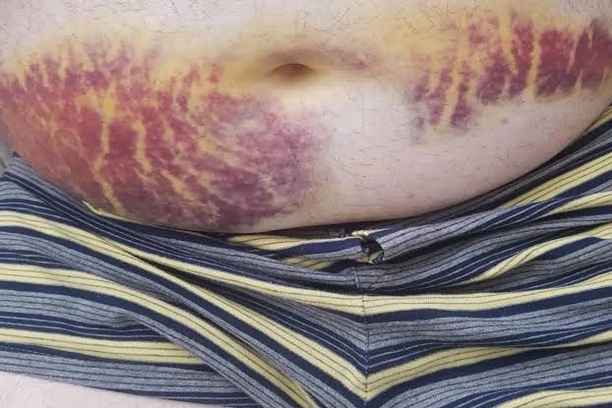
Bruising across the abdomen from a seat belt.
A seat belt bruise across the chest or abdomen deserves extra attention. A medical review found this bruising pattern points to internal injury in as many as 30% of emergency department cases, and not having a bruise doesn’t rule out injury. Symptoms of internal injury can also appear later: one published case report described a patient whose abdominal injury symptoms showed up several days after the crash (Nederlands Tijdschrift voor Geneeskunde, 2010). Belly pain after a crash means go to the ER.
Delayed Symptoms in Children

A mother comforts her daughter. Young children often can’t describe how they feel after a crash.
Kids can’t always tell you what hurts. The CDC notes that concussion signs may take hours or days to appear or be noticed, and they can be harder to spot in young children who can’t describe how they feel. In infants and toddlers, the CDC lists crying that can’t be soothed and refusing to nurse or eat as danger signs.
Emotional effects can look different in kids too. NIMH says that in children under 6, trauma symptoms can include acting out the scary event during play and being unusually clingy with a parent.
Watch your child closely in the days after a crash, and see their pediatrician or the ER if anything concerns you. After medical clearance, we also offer pediatric care.
When Delayed Symptoms Mean “Go to the ER Now”
Call 911 or go to the emergency room if you notice any of these:
Head injury danger signs: one pupil larger than the other, confusion, restlessness or agitation, not recognizing people or places, or you’re very drowsy or can’t be woken
Nerve emergency signs: trouble controlling your bladder or bowels, or numbness in the inner thighs, backs of the legs or around the rectum (Mayo Clinic calls this a medical emergency)
Possible internal injury: belly pain, especially with seat belt bruising
For the full list of danger signs, see our first 72 hours guide.
Who to See for Which Symptom
| Symptom |
Who to see first |
| Any danger sign above | ER or 911 |
| Headaches with confusion, memory or concentration problems | Physician |
| Belly pain or seat belt bruising | ER |
| Anxiety, nightmares, avoiding driving | Physician or mental health professional |
| Neck, back, shoulder or jaw pain and stiffness (emergencies ruled out) | Chiropractor or physician |
| Numbness or tingling without emergency signs | Physician or chiropractor, promptly |
Not sure how soon to book? Read how long after a car accident you should see a chiropractor.
How Long Do Delayed Symptoms Last?
For whiplash, Mayo Clinic says most people improve within a few weeks with a treatment plan that includes pain medicine and exercise, but some have neck pain that lasts much longer. Ongoing pain is more likely if:
Your first symptoms were intense and came on quickly
The pain spread into your arms
You’ve had whiplash before, or already had neck or low back pain
You’re older, or the crash was at high speed
Cleveland Clinic adds that whiplash is more likely to cause serious or lasting problems in older adults and in women.
For concussion, the CDC says most people feel better within a couple of weeks.
How We Help With Delayed Symptoms
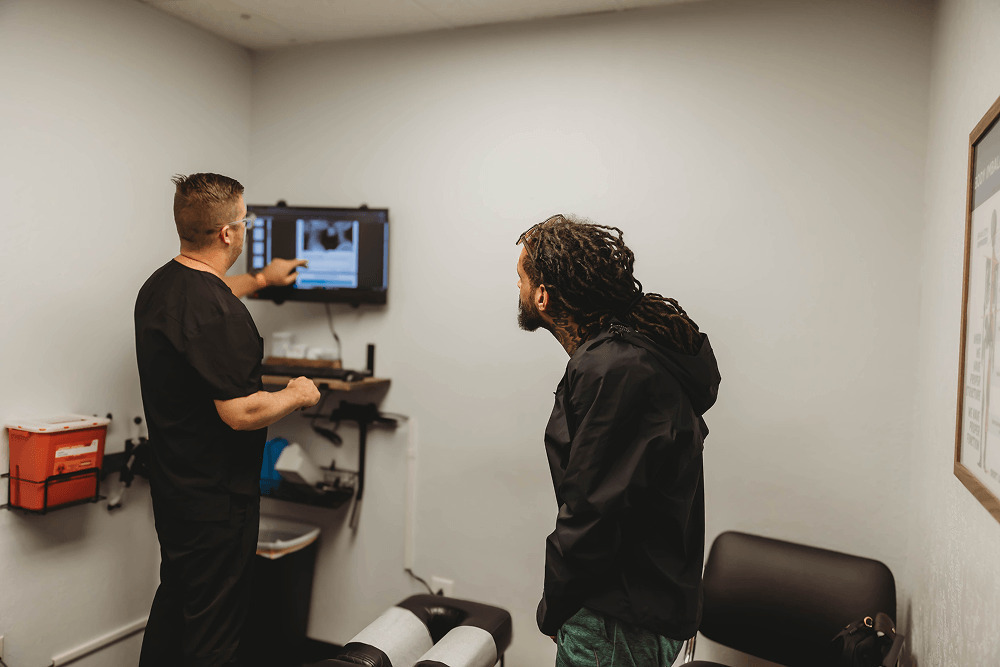
Reviewing spine x-rays with a patient during an auto injury exam.
Delayed pain can be confusing, especially when you felt fine at the scene. At Colorado Injury & Wellness, care for car accident injuries starts with a full exam of your spine, neck and extremities, with x-rays if needed. Tell us when each symptom started and how it has changed since the crash. That timeline helps guide the exam.
If the exam shows your symptoms are a fit for chiropractic care, we’ll build a plan with you. Depending on what we find, your plan may include:
Adjustments: chiropractic adjustments, including the gentle, instrument-based Activator Method when a sore neck or back calls for a lighter touch
Soft tissue care: myofascial release or dry needling for tight, guarded muscles
Disc and low back care: flexion-distraction or spinal decompression
Supporting therapies: laser therapy
If something points to an injury that needs a physician, we’ll tell you.
Paying for care: Colorado auto policies include $5,000 of medical payments coverage (MedPay) unless you rejected it, and it pays before your health insurance. See our payment options.
New pain since your accident? Our auto injury chiropractor team in Colorado Springs can help you find out what’s going on. Call (719) 471-4174 or book an appointment.
Frequently Asked Questions
Is it normal to feel worse a few days after a car accident?
It can be. Whiplash symptoms most often begin within days, and some take a day or more to fully appear. Feeling worse isn’t something to ignore, though. Get evaluated, especially if pain is spreading or getting stronger.
Can symptoms show up a week or more after a crash?
Yes. A week or two after a concussion, some people feel more emotional than usual or have trouble sleeping. PTSD symptoms usually begin within three months of a traumatic event. Any new physical symptom you notice after a crash is worth reporting to a healthcare provider, even if it starts weeks later.
How long does whiplash pain last?
Most people with whiplash improve within a few weeks, but some have pain for much longer. Intense early symptoms, pain spreading to the arms, older age and a previous neck injury are linked to longer recovery.
Why does my jaw hurt after a car accident?
Whiplash neck pain can spread to the face, and research suggests jaw pain is more common after whiplash, though studies vary widely on how often it happens. Mention jaw pain, clicking or trouble chewing at your exam.
Can you get a concussion without hitting your head?
Yes. Concussion is possible after a jolt to the body, not just a blow to the head. Fogginess, memory problems or headaches after a crash should be checked by a physician.
Is it too late to get checked if my pain started two weeks after the crash?
No. Delayed symptoms are a recognized part of crash injuries. Getting evaluated when symptoms appear helps find the cause and start the right care. Tell your provider exactly when symptoms began and how they’ve changed.