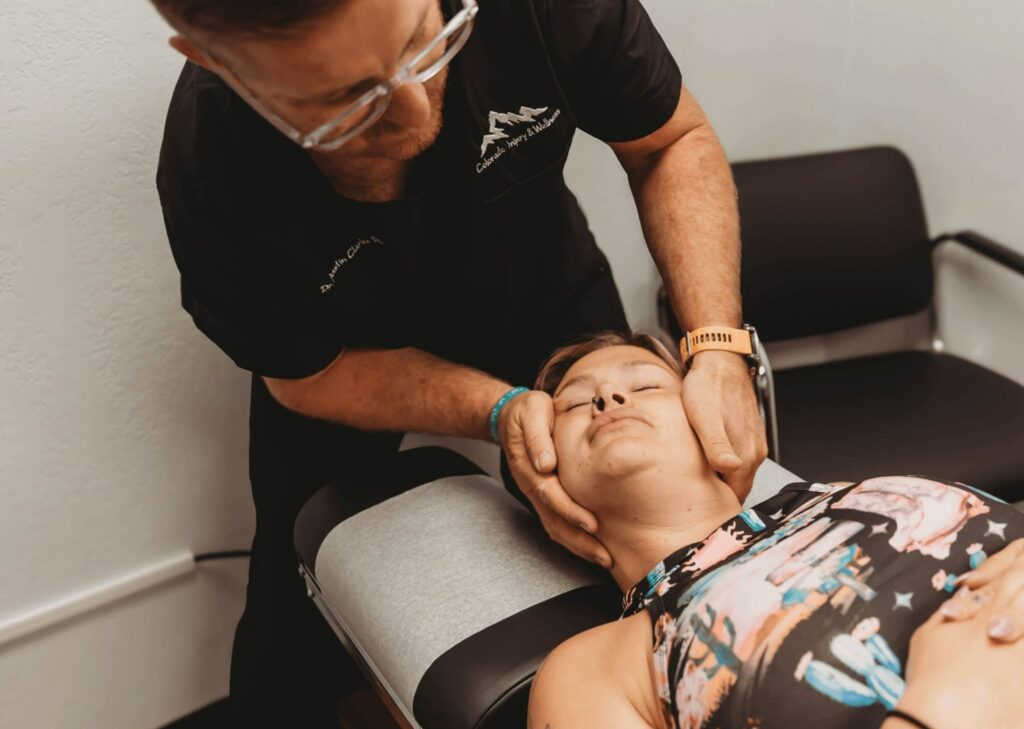
If you’ve been searching for an active release technique chiropractor, chances are you’re dealing with stubborn muscle pain, nerve irritation, or limited mobility that just won’t go away.
In clinics like Colorado Injury & Wellness, Active Release Technique (often called ART Active Release Technique) is used to treat soft-tissue restrictions that contribute to pain and dysfunction. But what exactly is it? Does it really work? And is Active Release Technique quackery—or a legitimate therapy?
Let’s break it down clearly and honestly.
What is Active Release Technique (ART)?
Active Release Technique (ART) is a patented, hands-on soft tissue treatment system designed to address problems in:
Muscles
Tendons
Ligaments
Fascia
Nerves
It was developed by Dr. P. Michael Leahy and is taught through a certification program. Many active release technique chiropractors complete specialized training to perform ART protocols.[1]
Unlike traditional massage, ART involves:
Locating abnormal or restricted tissue
Applying precise tension
Having the patient actively move the affected area
This combination of pressure and movement is what makes ART distinct.
How Does ART Active Release Technique Work?
The core concept behind ART is simple:
Injured or overused soft tissue can develop adhesions (scar-like restrictions) that limit movement and cause pain.
The Step-by-Step Process
During an ART session:
The chiropractor palpates (feels) for tight or restricted tissue
Specific tension is applied to the area
You actively move the muscle or joint through a guided range of motion
For people searching for a walk in chiropractor Colorado Springs, ART can be especially helpful when pain stems from repetitive strain, athletic overuse, or accident-related soft tissue damage.
Is Active Release Technique Quackery?
This is an important question—and it deserves a balanced answer.
What Critics Say
Some skeptics argue:
Research on ART is still limited
Many studies are small or short-term
Some claims exceed current scientific proof
It is a trademarked system, which raises marketing concerns
These criticisms focus mainly on the strength of evidence, not on ART being fraudulent.
What Research Suggests
Published studies and reviews suggest:
ART may help improve pain and range of motion
It may benefit certain soft-tissue conditions
More large, high-quality clinical trials are needed
The Honest Conclusion
Calling ART “quackery” is an oversimplification.
It is better described as:
A manual soft-tissue therapy with plausible mechanisms
Supported by some clinical evidence
Still needing stronger long-term research
In clinical practice, many patients report meaningful relief—especially when ART is combined with rehabilitation exercises and chiropractic care.
What Makes ART Different From Massage or Standard Chiropractic Adjustments?
ART
Massage Therapy
Chiropractic Adjustment
Active movement required
Passive
Focused on joint alignment
Targets specific adhesions
General muscle relaxation
Restores joint mechanics
Structured protocols
Varies by therapist
Spinal manipulation
ART often complements chiropractic adjustments rather than replacing them.
Active Release Technique in Colorado Springs
In Colorado Springs, patients dealing with sports injuries, car accidents, or chronic pain often look for an experienced chiropractor Colorado Springs provider trained in soft tissue techniques.
At Colorado Injury & Wellness, ART is part of an integrated care model led by Dr. Austin Clarke. The approach typically includes:
For patients searching for a walk in chiropractor Colorado Springs, accessibility and comprehensive care matter—especially when dealing with acute injuries.
What Does an ART Session Feel Like?
You may experience:
Firm pressure
Temporary discomfort
A stretching or pulling sensation
Immediate increase in mobility
Mild soreness afterward is common but usually short-lived.
ART should not cause sharp, radiating pain. Always communicate with your chiropractor during treatment.
Who Should Consider ART?
You may benefit from ART if you:
Have chronic tightness that stretching doesn’t fix
A proper assessment is essential before treatment.
FAQ: Active Release Technique Chiropractors
1. Does ART hurt?
It can be uncomfortable during treatment, but it should not feel sharp or dangerous. Most patients tolerate it well.
2. How many sessions do I need?
It depends on the condition. Acute issues may improve in a few visits; chronic conditions may require a structured plan.
3. Is ART the same as deep tissue massage?
No. ART involves precise tension combined with active movement and follows specific treatment protocols.
4. Is ART safe?
When performed by trained professionals, ART is generally considered safe with low risk of serious adverse effects.
5. Can I combine ART with chiropractic adjustments?
Yes. Many clinics, including Colorado Injury & Wellness, integrate both approaches.
6. Is ART covered by insurance?
Coverage varies depending on your insurance provider and diagnosis.
Final Thoughts: Is ART Worth Trying?
If you’re dealing with stubborn muscle pain or soft tissue injury, Active Release Technique chiropractors offer a focused, hands-on approach that may help restore mobility and reduce discomfort.
It’s not magic. It’s not a miracle cure. And it’s not inherently quackery.
It’s a structured soft-tissue method with growing—but still evolving—scientific support.
A consultation at Colorado Injury & Wellness with Dr. Austin Clarke may help determine whether ART fits your recovery plan.
Dr. Austin DC is a dedicated chiropractor who graduated from Palmer in June 2021, inheriting a legacy of chiropractic care from his father and numerous family members in the field. As the 5th of 6th children, he developed fluency in American Sign Language due to his deaf brother, showcasing his commitment to effective communication.
Looking for a chiropractor for plantar fasciitis? Learn the causes, symptoms, and treatment options, including chiropractic care, to help relieve heel pain.
The doctor is very good at explaining things and doing the adjustments. I even get relief from my sinuses. The staff is friendly and they take good care of me.
This is a very caring and nice place to get your chiropractic work done, Dr Clark is a caring person who loves to help people. I would highly recommend this office to anyone
I found Dr Austin when I hurt my back and was in some serious pain. His office got me in immediately! And he was able to provide me with immediate ease of pain. I’ve been going ever since once a month for over a year now. They are a friendly professional group and offer so much in the way of pain relief and healthy maintenance! I highly recommend!!! Dr Austin is the best!!!!
I have been having a lot of pain since my car accident. I have been struggling to find the right avenue for help. I am so grateful I came across Colorado Injury and Wellness. They treated me with such kindness, care, concern and understanding. Their knowledge of injuries and how to start helping me heal has been phenomenal. Very grateful!!!
This is your sign to go here! From adjustments, X-rays to softwave they do it all!! Staff is soo nice!! Doctor Austin words cannot express how awesome and talented he is! Magic hands for sure! They are like family!! Be Blessed!!!
Dr. Austin Clark is fabulous and so is his staff. He found injures the ER missed! He is helping me heal and move forward after my car wreck ! I highly recommend them!
I have been absolutely pleased with the doctor and the treatments!!! I feel very strongly that I am listened to and he is addressing all of my issues to move forward with more extensive treatments to get to the root. Only problem now that I am facing is that the office does not accept my Medicare and Colorado Springs Medicaid buy in health insurance. 😥
First time seeing a chiropractor and man was that AWESOME!!!! Dr. Austin will get all of the rice krispies out of you no problem. I would highly recommend anyone in the trades to go see him.
I did an eval with them and told them of two issues I've had: migraines and a pain in my right hip (sciatic nerve).<br>They took x-rays and told me all the ways my job has ruined my skeleton, but they also gave me a game plan to get it back to where it needs to be. I have not been able to start the process yet but definitely plan to.<br>They also gave me an adjustment while I was there and I have been experiencing relief already with just the 1 adjustment for the sciatic nerve pain. It was hard to work past 3pm because I was in so much pain but after the adjustment I don't start feeling pain until after 5 and the pain level is less.<br>Highly recommend!
I had an amazing experience. It was my first time and the doctor explain everything to me. He sat down with my husband and I to go over our history. Did X-rays and adjusted us! Love his personality! Can’t wait to come back and would recommend to anyone!
I’m a new client with Dr Clarke. First appointment he was able to get me out of pain, second appointment it became apparent that I found the right chiropractor for my daughter and I. I highly recommend this clinic for your care.
Dr. Austin is the best!!! He is interested in you as a person as well as a patient. He listens to you and is caring and thoughtful. As a Chiropractor, he gets an A+ and then some. The Staff is awesome! Everyone makes me feel comfortable the minute I walk in the door.
I am very grateful to have a chiropractor that is very caring and wonderful. He keeps me in perfect alignment, God bless you, Austin, and your staff.Thank you christine
Cannot recommend enough, Dr Clarke is a true professional & actually took the time to show & explain what he's trying to do. The staff are also top notch, Immersion & Kenia special shout out for being so rad!
Colorado Injury and Wellness is more than just a Healthcare provider. The team always greets you with a smile and makes you feel at home while keeping a positive, professional and atmosphere. Being a patient there, I know that I'm in the best care and always feel like my needs are their greatest priority. ⭐️⭐️⭐️⭐️⭐️'s
Dr. Austin has done a fabulous job with my five year old who suffers from chronic pain. He takes the time to talk to my son on his level in a way that he understands and helps him feel comfortable. He always listens to my concerns and offers a variety of solutions. He has done a wonderful job and I 5/5 recommend!
Dr. Clarke, Kennia, Emory and the rest of the staff at Colorado Injury & Wellness are truly amazing!!! They were all extremely beneficial to my healing journey after my accident! They handled everything with professional while also being super sweet and made me feel extremely comfortable at all times! Highly recommend paying them a visit whether it’s for accident-related injuries, other injuries or regular adjusting needs!
They helped me get back to every day life..from decompression of spine, soft wave is awesome.. dr.Austin.is the best he will get you back to be feeling good .can't recommend them enough.
Dr. Austin and all the staff are amazing. I actually was seeing another chiropractor and have switched my treatments to Colorado Injury & Wellness. I initially started with this group to heal a calf muscle issue using their soft wave treatment. I would recommend this group to anyone. You feel part of the family instantly. I was also impressed that Dr. Austin does x-rays of the entire body which is part of the first visit. All the equipment is high tech. Would recommend without any hesitation.
Dr. Austin works miracles. I went in to see him due to land sickness after sea sickness and vomiting for 10 straight days. He was so kind and empathetic and he listened attentively to what I had to say. He performed his adjustment on my body and ears and he provided the relief I desperately needed and I’ve felt immensely better since visiting him. I could not be more thankful for Dr. Austin and his staff at Colorado Injury & Wellness. 10/10 recommend for anyone looking for chiropractic care.
I highly recommend.Dr. Austin, I am 66 years old, hurt my back and had my doubts. After a couple weeks started to feel better. But still wasn't sure this was going to work for me. And then one morning, woke up. pain free and I am still pain free. Austin knows what he's talking about. I should have never doubted him....this<br>Is a life changer for me.Their staff are the greatest I've ever been around. They really Do care about their patients.. They're so very nice,and truly care ! If you have any pain, go see Doctor Austin. I will Never be able to thank him and the staff.. Enough.!!!!
100/100 Dr. Austin Clarke is truly and awesome man, he is so busy with people and different solutions to each situation but he takes the time to have small banter and talk about what’s really bothering you. He comes up with a plan that he thinks (knows) will work. I just started going to him and he has helped me feel so much better. I had hip issue for years and he said what he wanted to do and tada! Healed! The office is very open and inviting. All the staff is great I truly enjoy having a moment to say hello. 100/100 recommend!!!
Since I started seeing my chiropractor a few weeks ago, I've noticed a significant difference. My back ached all the time and would not go away no matter what I did. For every appointment, they began with decompression, softwave, and adjustments. I've noticed significant progress. I can now go far without my back crippling me at the end of the day, and I no longer experience continual pain. I had no idea how this practice would proceed when I arrived but they exceeded my expectations. They have provided thorough explanations and made it comfortable. This office is really valuable and I 100% support them!
Dr. Austin is great. I can’t stress it enough. If you have back problems or pain that you can’t seem to pinpoint the origin, then you need to stop in. My shoulder was injured and Dr. Austin recommended Soft Wave treatment. It was a game changer. Again don’t hesitate, go in and see him. His staff is great as well.
I had an issue In my chest, I could not breathe in without pain. I scheduled a stress IV to be sure I wasn’t dehydrated or having anxiety. When that didn’t do the trick, I was sure I needed to go to the emergency room. I was referred to Colorado Injury and Wellness by our friends at Revive Hydration and Wellness. Dr. Austin Clarke saw me right away, performed a rib adjustment which immediately helped. By the next morning, the pain was completely gone, and I’m able to breathe perfectly! Highly recommend!!
Dr. Austin was amazing from the start, answering all my questions and making me feel at ease. Plus, he speaks both Spanish and English, which makes communication super simple.<br><br>Throughout the visit, he showed true professionalism by explaining every detail and adapting to my needs. I highly recommend his services!
Dr. Austin is amazing at what he does! I had been dealing with some SI (sacroiliac) joint issues for a while which was frustrating because I teach Pilates and there were some moves I would not do because they were painful. Now these same moves are no longer an issue and I truly believe it is due to the wonderful chiropractic care I receive from Dr. Austin. If anything is going on with your body, I highly recommend scheduling an appointment with him. He's the best!
If you want to feel your best come here! Dr. Austin is a great Chiropractor! Very knowledgeable and makes you feel like family! Our whole family goes and loves him!
If your body is beginning to quit on you, please go see Dr. Austin! This man has a gift for his profession and a talent for understanding people who are in pain. He is incredibly easy to get along with, has a great sense of humor and his technique is flawless!! His assistant Tiffany who schedules appointments is amazingly kind and will work with you to make your schedule fit perfectly! I truly can’t say enough about this place, please go find out for yourself! Dr. Austin is the real deal!
Dr has adjusted my husband & I for about 3 months. He has made us more comfortable in our own bodies. I have a should that gives me a lot of grief. He mentioned about this red light that helps healing in certain spots. I tried it for 6 visits & I can more my shoulder so much easier & just a little pain sometimes.<br>Thanks for helping us get moving again.
As a healthcare provider, I know the importance of receiving care from someone who is skilled and knowledgeable, but even more important is finding someone who actually cares. Dr. Austin is extremely kind and relatable. He’s got a great heart and I trusted him right away. I highly recommend him to any of my family, friends, or patients needing chiropractic care. The office team is outstanding as well!<br>Sincerely,<br>Zachary Wight,<br>Psychiatric Nurse Practitioner
This is a wonderful chiropractor office. I have been going there for a few years and they have helped me. Neck and back pain. Love, Love, them. Professional and very caring and friendly.
Top notch! They are experts in knowledge of all back and joint issues. Dr. Austin is really open and honest about what care is needed. Everybody is upbeat and friendly. Clean office. Really efficient with insurance claims. I always feel better after the adjustment. Go here now!
Dr. Austin and the staff at Colorado Injury & Wellness are incredible! They provide the best care for Matt to function well and continue on his healing journey.
Wow! Austin made such a difference with his treatment for me! I feel fantastic after being treated by him! The whole staff there is wonderful, inviting, friendly and responsive! Great experience!