
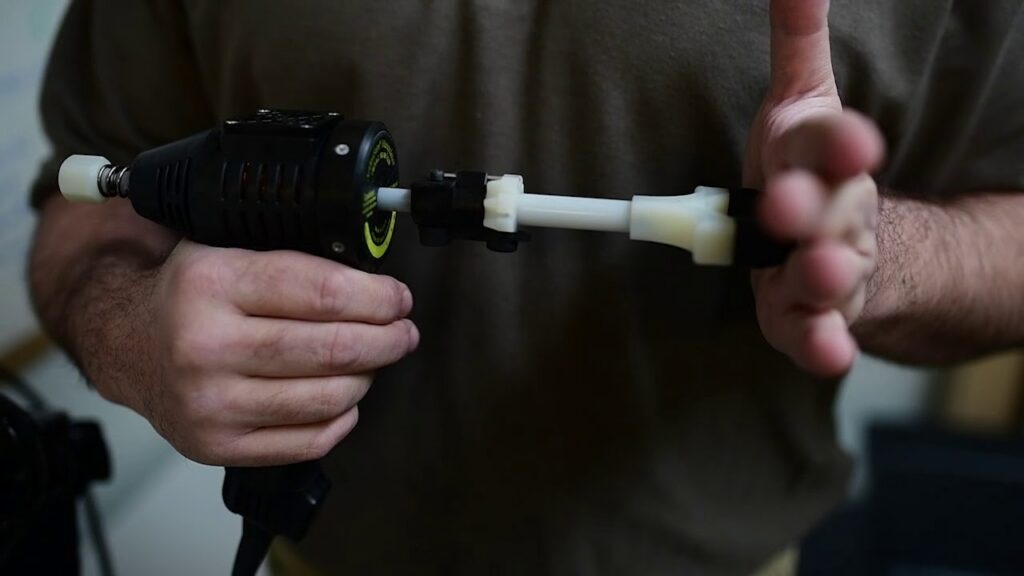

Introduction: A New Era of Chiropractic Care
If you have ever visited a chiropractor, you may have wondered whether there is a gentler option than the traditional hands-on adjustment — the kind that involves twisting, turning, and that signature cracking sound. The good news is that modern chiropractic care has evolved significantly, and today patients have access to advanced instrument-based techniques that are just as effective, but far more comfortable.
Two of the most talked-about chiropractic instruments today are the ArthroStim and the Activator. Whether you are searching for the best chiropractor in Colorado Springs, exploring your options after an injury, or simply curious about what instrument-assisted chiropractic care involves, this guide covers everything you need to know.
At Colorado Injury & Wellness, Dr. Austin Clarke and his team provide evidence-informed chiropractic care in Colorado Springs using a range of advanced tools and techniques — including ArthroStim adjusting — tailored to each patient’s unique needs.
What is Chiropractic Adjusting? (A Quick Background)
Chiropractic care is built on a straightforward concept: misalignments in the spine and joints — called subluxations — can disrupt nerve signals, cause pain, restrict movement, and affect overall body function. A chiropractic adjustment is a precise, controlled movement applied to a joint to restore proper alignment and mobility.
Traditional manual chiropractic adjustments use the chiropractor’s hands to apply a single, quick high-velocity thrust to the affected joint. This is what typically produces the well-known “popping” or “cracking” sound — which is simply the release of gas from the joint, not bones cracking.
While manual adjustments are highly effective for many patients, they are not suitable for everyone. Children, seniors, pregnant women, post-surgical patients, and individuals with certain health conditions may need a gentler alternative. This is where instrument-based tools like the ArthroStim and the Activator come in.
Importantly, instrument adjusting has become the fastest-growing form of chiropractic manipulation — due to both its ease of use for the practitioner and its safety and comfort for the patient.
What Is ArthroStim Adjusting?
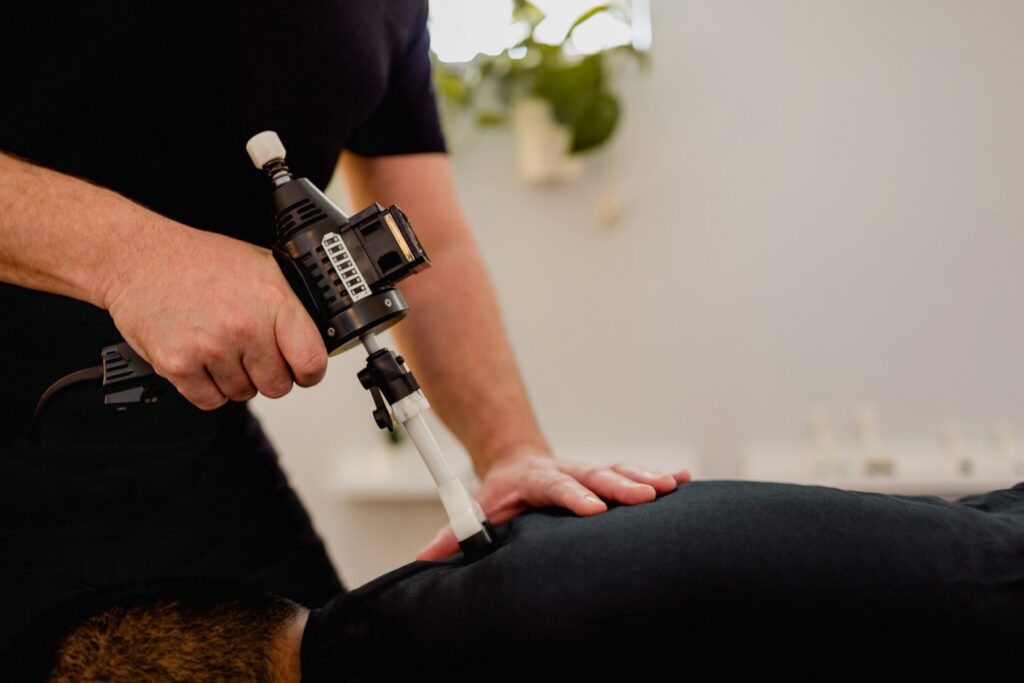
The ArthroStim is a handheld, FDA-registered chiropractic instrument designed to deliver rapid, low-force, controlled mechanical impulses to specific joints and soft tissues. Rather than delivering one single manual thrust — as in traditional adjustments — the ArthroStim delivers 12 to 14 micro-pulses per second to help mobilize joints, reduce muscle tension, and stimulate the nervous system in a gentle and targeted way.
Visually, the device looks similar to a drill and is held in a similar manner by the chiropractor. Its appearance may seem high-tech, but its function is elegantly simple: it mimics and enhances what a chiropractor’s hands would do — only faster, more precisely, and with adjustable force.
- How Does the ArthroStim Work?
To understand how the ArthroStim works, it helps to understand how any chiropractic adjustment works at a neurological level. When a chiropractor applies a precise movement to a joint, it stimulates special sensory nerve receptors in the affected area called neural receptors. These receptors transmit nerve impulses to the brain. The brain processes this information and sends self-correcting commands to the muscular system — initiating the healing process.
The ArthroStim takes this process further by delivering rapid, repetitive inputs. This produces what is described as a “snowballing” effect on neural receptors — each successive tap builds on the last, allowing the instrument to transmit more neurological information to the brain with less effort, less pain, and less force.
From a neurological standpoint, the ArthroStim is described by its manufacturer not simply as a nerve activator but as a “nervous system interrupter” — it creates a controlled interruption that draws the nervous system’s focus to a specific area requiring attention, operating at the somatoneuron (low beta) level.
At the same time, the ArthroStim stimulates proprioceptors — the sensory receptors responsible for detecting proper motion and alignment in joints and muscles — while carefully avoiding nociceptors, which are the receptors responsible for sending pain signals to the central nervous system. This is a key reason why ArthroStim adjustments feel comfortable rather than painful.
- Force and Precision
One of the most compelling aspects of the ArthroStim is its versatility in force. A chiropractor can apply pressure ranging from just a few ounces all the way up to 40 pounds of force — making it appropriate for everyone from newborns and elderly patients with fragile bones to large, muscular patients who are otherwise difficult to adjust manually.
Additionally, the small contact tip of the device allows for extremely targeted adjustments. This means the chiropractor can reach specific vertebrae or joints that might otherwise be difficult to address through manual techniques.
| Key Fact: A typical ArthroStim treatment uses approximately 10 to 12 taps per area. The entire adjustment process is smooth, gentle, and usually takes the same amount of time as a manual session. |
Benefits of ArthroStim Adjusting
Patients and chiropractors who use the ArthroStim consistently highlight the following advantages:
- No popping or cracking: The ArthroStim does not require joint cavitation to be effective, making it ideal for patients who feel uneasy about traditional adjustment sounds.
- Gentle on the body: Fewer side effects and less post-treatment muscle soreness compared to manual adjustments.
- Highly adjustable force: From a few ounces to 40 pounds, the chiropractor can dial in exactly the right force for each patient and each area of the body.
- Precision targeting: The instrument can reach small, specific areas of the spine and other joints with exceptional accuracy — even body parts that are difficult to access manually.
- Faster and more efficient sessions: Because the ArthroStim delivers multiple inputs per second, treatment sessions are quicker while still achieving thorough results.
- Longer-lasting adjustments: Some practitioners report that ArthroStim adjustments tend to hold for longer durations than single manual thrusts.
- Safe for all ages and conditions: Ideal for children, seniors, pregnant women, post-surgical patients, and those with acute injuries or chronic conditions.
- Works alongside other techniques: The ArthroStim can be used on its own or in combination with manual adjustments and other therapies — a hybrid approach many patients find most effective.
- Reduces strain on the chiropractor: Instrument adjusting reduces the physical toll on the practitioner’s hands, wrists, and shoulders — something many chiropractors cite as a major benefit for long-term practice sustainability.
Conditions Commonly Treated with ArthroStim
Because of its precision and gentle nature, ArthroStim adjusting is well-suited for a broad range of musculoskeletal conditions, including:
- Neck pain and cervical misalignments
- Lower back pain and lumbar dysfunction
- Tension headaches and cervicogenic headaches
- Mid-back (thoracic) pain and stiffness
- Hip, shoulder, knee, and other joint issues
- Sports injuries and repetitive strain injuries
- Post-surgical recovery and rehabilitation
- Disc-related pain (under appropriate clinical guidance)
- TMJ (temporomandibular joint) dysfunction
- General mobility limitations and postural imbalances
It is important to note that the ArthroStim is not a standalone treatment for all conditions. It works best as part of a comprehensive care plan that may include exercise rehabilitation, soft tissue therapy, postural correction, and lifestyle guidance.
What Is the Activator Method?
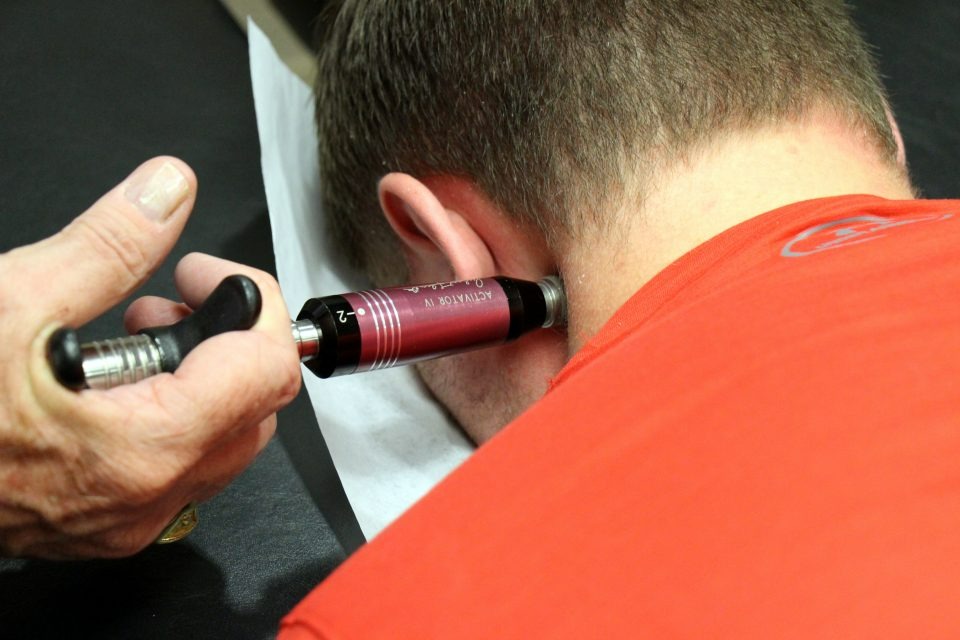
The Activator is another popular and widely used chiropractic instrument. Developed in 1967 by Dr. Arlan Fuhr and patented by Activator Methods International on September 26, 1978, the Activator has become one of the most studied chiropractic tools in the world.
Unlike the ArthroStim, the traditional Activator is a small, handheld, spring-loaded instrument that delivers a single, controlled, reproducible tap to the spine or other body part. It is categorized as a Mechanical Force Manual Assisted (MFMA) instrument. Newer versions — including the cordless Activator V — are electronically powered rather than spring-loaded.
The aim of the Activator is to produce enough force to move the vertebrae and restore motion, but not enough force to cause injury or discomfort. When the chiropractor presses the trigger, the instrument delivers one quick thrust of low-force impulse to the targeted area — feeling to the patient much like having a reflex tested by tapping the knee.
- The Activator as a Full Chiropractic System
What sets the Activator apart from the ArthroStim is that it is more than just a tool — it is the centerpiece of a complete chiropractic diagnostic and treatment system called the Activator Methods Chiropractic Technique (AMCT). This system involves a structured sequence of:
- Biomechanical assessments and diagnostic provocative maneuvers
- Leg-length analysis (prone functional leg length checks) to identify spinal subluxations
- Reflex testing and neurological checks
- Sequential treatment progressing from the lower back toward the head
- Post-adjustment re-evaluation to confirm correction
This means that when a chiropractor uses the Activator Method, they are following a step-by-step diagnostic protocol — not simply applying the instrument wherever pain is felt.
| Usage Stat: According to the 2003 National Board of Chiropractic Examiners, 69.9% of chiropractors used the Activator technique, and 23.9% of patients received it. An estimated 45,000 chiropractors worldwide use the Activator Method. |
- Activator FDA Approval and Research
The Activator V is the first cordless electronic chiropractic adjustment instrument registered with and approved by the U.S. Food and Drug Administration (FDA). The first Activator instrument received 510(k) clearance in 1997. Activator Methods claims to be the only instrument-adjusting technique backed by clinical trials, citing 26 clinical trials. Activator Methods has also received grants from the National Institutes of Health and has published extensive peer-reviewed research.
A 2012 systematic review published in the Journal of the Canadian Chiropractic Association (PMC/NCBI) reviewed 8 eligible studies and found that the Activator Adjusting Instrument provided comparable clinically meaningful benefits to high-velocity, low-amplitude (HVLA) manual manipulation for patients with acute and chronic spinal pain, temporomandibular joint (TMJ) dysfunction, and trapezius trigger points.
It is worth noting that critics — including some independent researchers — have raised concerns about the reliability of the leg-length diagnostic component of the AMCT and the fact that much of the research has been funded by the technique’s developer. More large-scale, independent studies are needed for a complete picture.
Benefits of the Activator Method
- Gentle and low-force: Ideal for patients who cannot tolerate stronger manual adjustments.
- No twisting or turning: The patient simply lies face down; there is no rotation of the neck or spine.
- Speed prevents muscle guarding: The instrument is fast enough that the body’s muscles do not have time to tense against the force, facilitating a more effective adjustment.
- Precisely localized: The Activator can target a single vertebra or small joint with minimal impact on surrounding tissue.
- Structured diagnostic protocol: The full AMCT system provides a systematic, repeatable approach to identifying and treating spinal dysfunction.
- Widely researched: More clinical trials than any other instrument-adjusting technique.
- Suitable for all ages: Including patients with osteoporosis, degenerative joint disease, and post-surgical restrictions.
- No cracking sounds: Reduces patient anxiety associated with traditional adjustments.
ArthroStim vs. Activator: Head-to-Head Comparison
Both the ArthroStim and the Activator are excellent instrument-based chiropractic tools that share the same fundamental goal: gentle, effective, low-force adjustments without the need for cracking or twisting. However, there are meaningful differences in how they work and what they are best suited for.
| Feature | ArthroStim | Activator |
|---|---|---|
| Mechanism | Multi-thrust oscillation (12–14/sec) | Single spring-loaded impulse |
| Power Source | Electric (handheld) | Manual spring (newer: electronic) |
| Force Level | Few ounces up to 40 lbs (adjustable) | Low-force, single controlled tap |
| Speed | 12–14 rapid taps per second | One quick thrust per point |
| Cracking Sound | None | None |
| Diagnostic System | Standalone tool | Full technique system (leg checks, reflex tests) |
| Best For | Muscle tension, broader conditions | Focused joint-specific adjustments |
| Typical Session | 10–12 taps per area | One thrust per affected area per session |
| FDA Status | FDA-registered | FDA-approved (1997) |
| Research Backing | Studies show comparable effectiveness | 26+ clinical trials cited |
Key Differences Explained
1. Single Thrust vs. Repetitive Oscillation
The most fundamental difference is in the delivery mechanism. The Activator delivers one precise, spring-loaded impulse per application. The ArthroStim delivers 12 to 14 rapid taps per second — a continuous oscillating motion. The ArthroStim’s repetitive input creates a cumulative neurological effect that some practitioners believe allows for more thorough tissue response and longer-lasting corrections.
2. Electric vs. Manual (Spring-Loaded)
The standard Activator is a non-electric, spring-loaded device — portable and easy to use in any setting. The ArthroStim is electrically powered, which gives it greater consistency and control of force output. Newer Activator models (such as the Activator V) are also cordless and electronic.
3. Tool vs. Full System
The ArthroStim is a standalone adjusting instrument. The Activator, by contrast, is the core component of the complete Activator Methods Chiropractic Technique — a structured diagnostic and treatment system with defined protocols for assessment and care. This makes the Activator Method more of a comprehensive approach, while the ArthroStim is typically integrated into the chiropractor’s broader existing technique.
4. Force and Versatility
The ArthroStim offers a wider adjustable force range — from a few ounces up to 40 pounds — and can address a broader range of conditions and body areas. While the Activator also delivers a controlled low-force impulse, it is better suited for focused, highly specific point-by-point adjustments.
5. Patient Comfort
Both instruments are considered very comfortable and gentle. However, many patients find the ArthroStim’s rapid, gentle tapping sensation to feel more like a light vibration, while the Activator’s single impulse can feel slightly more noticeable. Individual response varies.
Which One Is Right for You?
The best instrument for you depends on your condition, your body, your preferences, and your chiropractor’s clinical assessment. Here are some general guidelines:
- Consider ArthroStim if: you have widespread muscle tension across multiple areas, you require faster recovery times, you are a difficult-to-adjust patient (large frame, high muscle tone), or your chiropractor uses it as part of a hybrid approach alongside manual techniques.
- Consider the Activator if: you prefer a highly structured, research-backed diagnostic system, you have specific focused joint dysfunction, or you are visiting a chiropractor trained and certified in the full Activator Methods Chiropractic Technique.
In many practices, both tools may be used together as part of a hybrid treatment plan. The right approach is always the one determined by your chiropractor after a thorough examination of your specific condition and history.
| Pro Tip: Do not hesitate to ask your chiropractor which tool they prefer and why. A good chiropractor will always explain their reasoning and welcome your questions. |
What to Expect During an ArthroStim Adjustment Session
If you are considering ArthroStim chiropractic care for the first time, here is a brief walkthrough of what a typical session looks like:
Step 1 — Consultation and Assessment: Your chiropractor will conduct a thorough health history review and physical examination to identify areas of dysfunction, pain, and restricted movement.
Step 2 — Positioning: You will typically lie face down on the chiropractic table, though some adjustments may be performed while seated or standing depending on the area being treated.
Step 3 — The Adjustment: Your chiropractor will place the ArthroStim instrument against the targeted joint or vertebra and activate it. You will feel a gentle, rhythmic tapping — approximately 10 to 12 taps per area. There is no twisting, cracking, or discomfort.
Step 4 — Post-Adjustment Check: Your chiropractor will re-evaluate range of motion, muscle tension, and pain levels to assess the effectiveness of the treatment.
Step 5 — Treatment Plan: Based on your condition, your chiropractor will recommend a frequency of visits — typically 1 to 2 times per week initially — adjusting the plan as your condition improves.
Sessions are generally efficient, often taking a similar amount of time to a traditional manual adjustment, with most patients reporting immediate relief or improved range of motion following treatment.
Is ArthroStim Adjusting Safe? What Does Research Say?
Instrument-assisted chiropractic adjustments — including those performed with the ArthroStim — have an excellent safety profile. Multiple studies have shown that instrument adjusting is just as effective as traditional chiropractic techniques for relieving pain and increasing range of motion, while offering fewer side effects and less post-treatment muscle soreness.
The ArthroStim is FDA-registered and has been used clinically for many years. Its controlled, low-force nature significantly reduces the risk of post-treatment discomfort compared to high-velocity manual manipulation.
- Who Should Exercise Caution?
As with any chiropractic technique, there are situations where ArthroStim adjusting may not be appropriate without a full clinical evaluation:
- Active fractures or bone cancer in the treatment area
- Severe osteoporosis (though instrument adjusting may still be appropriate with modification)
- Infections or tumors in the target area
- Certain neurological conditions (requires careful evaluation)
Always disclose your full medical history to your chiropractor before treatment begins so they can determine the safest, most effective approach for your individual situation.
Frequently Asked Questions (FAQs)
Question 1: Does ArthroStim adjusting hurt?
No. Most patients describe the sensation as a gentle, rhythmic tapping. There is no twisting, cracking, or discomfort. The instrument does not require joint cavitation (the “pop”) to be effective.
Question 2: Is the ArthroStim the same as the Activator?
No. While both are instrument-based chiropractic tools that deliver low-force adjustments without cracking, they work quite differently. The ArthroStim delivers 12–14 rapid oscillating taps per second. The Activator delivers a single, spring-loaded impulse per application. The Activator is also part of a full diagnostic system, while the ArthroStim is a standalone adjusting instrument.
Question 3: How many sessions will I need?
The number of sessions depends entirely on your condition, severity, and how your body responds to treatment. Many patients experience improvements after just a few visits. Your chiropractor at Colorado Injury & Wellness will develop a personalized care plan based on your individual assessment.
Question 4: Is instrument-based chiropractic as effective as manual adjustments?
Yes, for many conditions. Multiple studies have shown that instrument-based adjustments provide comparable clinical benefits to high-velocity, low-amplitude manual manipulation. For some patients — particularly those who are sensitive, elderly, or post-surgical — instrument-based techniques may actually be the more effective option.
Question 5: Can the ArthroStim and Activator be used together?
Yes. Many chiropractors use a hybrid approach, incorporating both instrument-based and manual techniques depending on the patient’s needs and the area being treated.
Question 6: Is chiropractic covered by insurance?
Coverage varies by plan and provider. We recommend contacting your insurance carrier directly to understand your chiropractic benefits. The team at Colorado Injury & Wellness can also help you navigate your coverage options.
Experience Expert ArthroStim Chiropractic Care in Colorado Springs
If you are looking for a trusted chiropractor in Colorado Springs who offers advanced, instrument-assisted care, look no further than Colorado Injury & Wellness.
Dr. Austin Clarke and his dedicated team are committed to providing personalized, evidence-informed chiropractic care that addresses the root cause of your pain — not just the symptoms. Whether you are dealing with back pain, neck pain, headaches, a sports injury, or simply want to improve your overall spinal health, Colorado Injury & Wellness offers a comprehensive range of treatment options tailored to your needs.
The practice serves patients across Colorado Springs and the surrounding communities, earning a reputation as one of the best chiropractors in Colorado Springs through attentive, compassionate, results-driven care.
| Colorado Injury & WellnessDr. Austin Clarke, DC1819 W Colorado Ave, Colorado Springs, CO 80904, United StatesPhone: +1 719-471-4174Find Us on Google Maps |
Conclusion: The Right Tool for the Right Patient
Both the ArthroStim and the Activator represent the very best of modern, patient-centered chiropractic care. They share a commitment to gentle, low-force, precise adjustments without the need for cracking or twisting — making high-quality chiropractic care accessible to patients of all ages and conditions.
The ArthroStim excels in its speed, versatility, and neurological precision — delivering 12 to 14 rapid taps per second that create a powerful cumulative effect on the nervous system with minimal force. The Activator stands out for its structured diagnostic system, extensive research base, and highly focused single-impulse delivery.
The best chiropractor is not the one who uses the most sophisticated tool — it is the one who takes the time to understand your unique situation and chooses the approach that is right for you. At Colorado Injury & Wellness, Dr. Austin Clarke does exactly that.
If you are in Colorado Springs and ready to experience what modern chiropractic care can do for you, contact Colorado Injury & Wellness today to schedule your consultation.
Sources & References
The following sources were used in the research and preparation of this article:
- 96th Street Chiropractic — ArthroStim Adjusting Technique: https://96thstreetchiropractic.com/arthrostim-adjusting-technique/
- Rivano Chiropractic Health Center — How Does ArthroStim Adjusting Work?: https://www.rivanochiropractic.com/blog/how-does-arthrostim-adjusting-work
- Shelby County Chiropractic — ArthroStim Adjustment: https://www.shelbycountychiropractic.com/2019/08/arthrostim-adjustment-how-does-it-work/
- LifeSpring Chiropractic — ArthroStim Instrument Adjusting: https://lifespringchirooc.com/arthrostim-instrument-adjusting
- ArthroStim Official Store: https://arthrostim.store/
- Element Chiropractic — Arthrostim vs. Activator: https://elementchirocare.com/blog/chiropractic/activator-vs-arthrostim/
- Sims Finn Chiropractic — Activator vs. ArthroStim: https://simsfinnchiropractic.com.au/what-is-the-difference-between-the-activator-and-arthrostim/
- Wikipedia — Activator Technique: https://en.wikipedia.org/wiki/Activator_technique
- Spine-Health — Activator Method: What to Expect: https://www.spine-health.com/treatment/chiropractic/activator-method-what-expect
- Spine-Health — Activator Method Chiropractic Technique: https://www.spine-health.com/treatment/chiropractic/activator-method-chiropractic-technique
- Spine-Health — Activator Method Efficacy and Risks: https://www.spine-health.com/treatment/chiropractic/activator-method-efficacy-and-risks
- PMC/NCBI — Clinical effectiveness of the Activator adjusting instrument (2012 systematic review): https://pmc.ncbi.nlm.nih.gov/articles/PMC3280118/
- Activator Methods International — Clinical Trials: https://activator.com/clinical-trials/
- Current Chiropractic — Why Our Chiropractors Use the Activator: https://currentchiropractic.com/why-our-chiropractors-use-the-activator/