
Introduction
Many people considering shock wave therapy want to know how it actually works inside the body. Understanding the science behind a treatment helps patients set realistic expectations, evaluate safety, and feel more confident about why it is used for certain conditions and not others. Research-based explanations also help distinguish evidence-supported effects from marketing claims.
What Is ESWT?
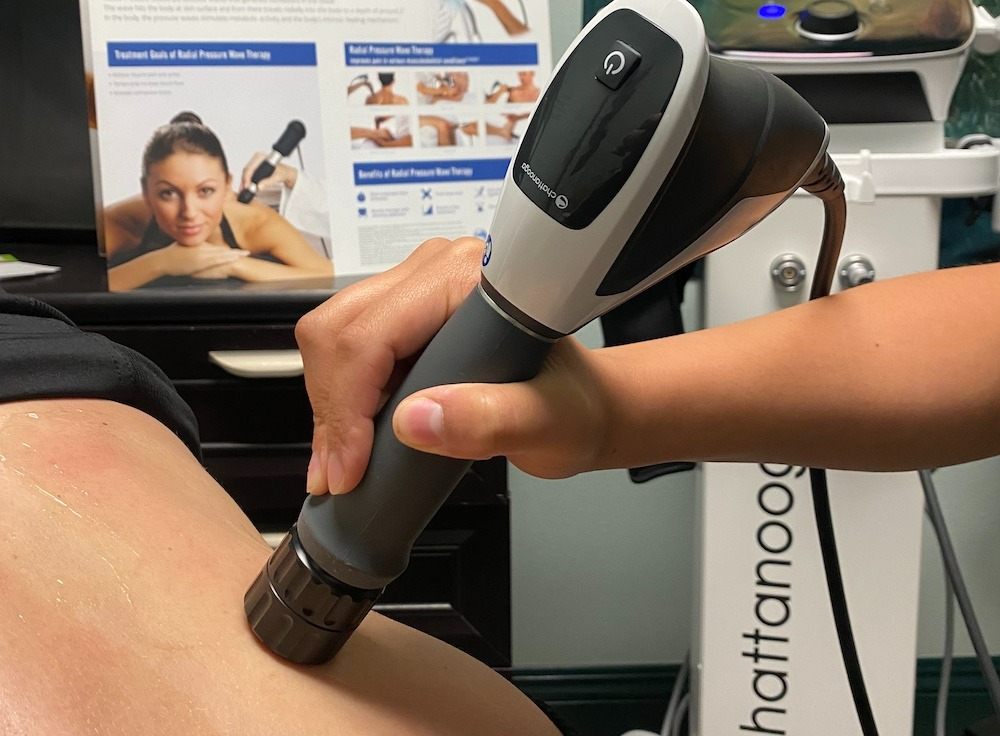
Extracorporeal Shock Wave Therapy (ESWT) is a non-invasive treatment that delivers acoustic shock waves through the skin to targeted tissues. These shock waves are high-energy mechanical pulses, not electrical currents or heat.
The therapy was first developed from medical shock wave technology used in lithotripsy (kidney stone treatment) and was later adapted for musculoskeletal and soft-tissue conditions beginning in the 1980s.
Modern ESWT systems vary by:
- Energy level (low vs. high energy)
- Wave focus (focused vs. radial/broad)
- Treatment parameters such as pulse number and frequency
These differences matter because biological responses depend heavily on how the mechanical energy is delivered.
From Physics to Biology
At a physical level, shock waves are short acoustic pulses that transfer mechanical energy into tissue. When these waves pass through the body, they create rapid pressure changes and mechanical stress within cells and the surrounding extracellular matrix .
This mechanical stress causes micro-level effects such as:
- Tissue displacement
- Shear stress
- Localized mechanical stimulation
In some contexts, cavitation (the formation and collapse of microscopic bubbles) may also occur, further stimulating tissue structures. These physical events are important because cells are highly sensitive to mechanical forces.
Mechanotransduction Explained Simply
Mechanotransduction is the process by which cells convert mechanical signals into chemical and biological responses. In simple terms, cells “sense” the shock waves and respond by activating internal repair and signaling pathways .
Research shows that after ESWT exposure, cells can:
- Increase signaling related to tissue repair
- Release growth factors
- Activate pathways involved in regeneration and remodeling
Key molecules involved include vascular endothelial growth factor (VEGF) and nitric-oxide–related signaling, both of which play roles in circulation and healing responses.
Blood Flow, Inflammation, and Tissue Response
One of the most consistently reported biological effects of ESWT is improved local blood flow. Animal and human studies suggest that shock wave therapy can stimulate angiogenesis (the formation of new blood vessels) and improve microcirculation in treated tissues .
Nitric oxide is frequently identified as a mediator in this process, helping explain why treated areas may receive increased oxygen and nutrient delivery following therapy .
ESWT also influences inflammation, but the response is complex. Studies show changes in inflammatory mediators such as IL-6, IL-8, and MCP-1 after treatment. Importantly, the direction of this response—whether pro-inflammatory or anti-inflammatory—depends on factors like energy level, dosage, timing, and tissue type .
This dose-dependent behavior is one reason why protocols must be carefully designed rather than generalized across conditions.
Pain Relief: What Scientists Think is Happening
Pain reduction is one of the most common reasons ESWT is used, but researchers agree that no single mechanism fully explains the effect.
Several theories are supported by current evidence:
- Hyperstimulation analgesia: strong mechanical stimulation may temporarily disrupt pain signaling
- Nerve modulation: shock waves may influence peripheral nerve activity and nociceptor sensitivity
- Indirect pain reduction: as blood flow improves and tissues heal, pain may decrease over time
Most researchers view pain relief as a combined effect of these mechanisms rather than a single pathway, and studies continue to explore their relative contributions .
Clinical trials report symptom improvement in conditions such as plantar fasciitis and certain tendinopathies, though outcomes and optimal protocols vary across studies.
Why ESWT Is Considered Non-Invasive
ESWT is classified as non-invasive because it does not involve incisions, injections, or implanted devices. Treatments are typically performed on an outpatient basis, and patients usually return to normal activities shortly afterward.
Reported side effects are generally mild and temporary, including:
- Local soreness during or after treatment
- Redness or bruising
- Minor hematoma at the treatment site
Serious complications are rare when established guidelines are followed. However, ESWT is not appropriate for everyone. Contraindications commonly cited in the literature include severe bleeding disorders and certain pregnancy-related considerations, depending on treatment location.
What Research is Still Exploring
Despite decades of use, ESWT remains an active area of research. Scientists are still investigating:
- Optimal energy levels and dosing schedules
- Tissue-specific responses (tendon, nerve, skin, bone)
- Long-term outcomes and durability of results
- Comparative effectiveness versus other conservative treatments
There is also growing interest in how shock wave therapy interacts with immune signaling and regenerative pathways, particularly when combined with other therapies .
This ongoing research is important because it helps refine protocols and improves patient selection rather than assuming a one-size-fits-all approach.
Conclusion
Current evidence suggests that acoustic shock wave therapy interacts with the body through mechanically driven biological processes. By stimulating mechanotransduction, improving blood flow, modulating inflammation, and influencing pain signaling, ESWT offers a non-invasive option for certain musculoskeletal and soft-tissue conditions.
At the same time, researchers emphasize that outcomes depend on correct indications, dosing, and treatment protocols—and that continued study is essential for defining best practices .
To learn how this therapy is used in practice, read our guide on How SoftWave Therapy Works.