Scoliosis is a condition that often starts quietly—sometimes without pain, sometimes without obvious symptoms—but it can have a long-term impact on posture, mobility, and overall spinal health. If you or someone you know has been diagnosed, a very common question comes up: Can a chiropractor actually help with scoliosis?
Let’s break this down clearly, with facts, practical insights, and a realistic understanding of what chiropractic care can—and cannot—do.
What is Scoliosis?
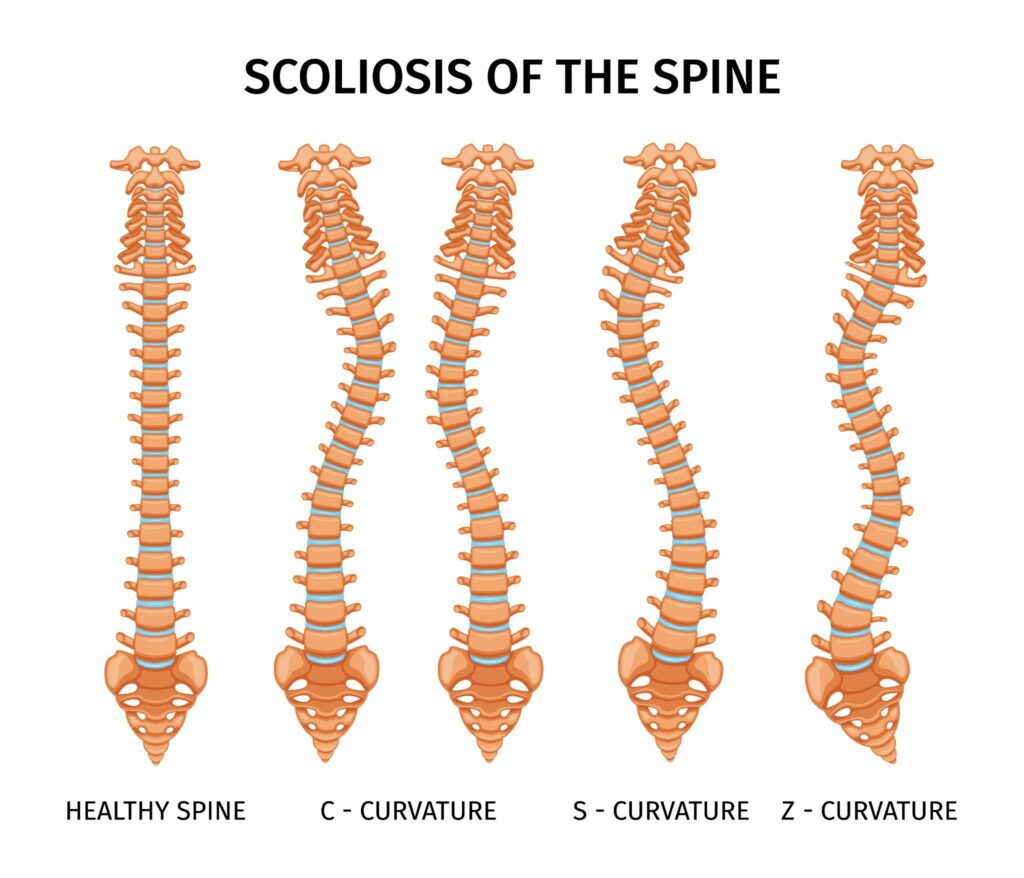
Scoliosis is a condition where the spine curves sideways instead of running straight down the back. Instead of a straight vertical alignment, the spine may form an “S” or “C” shape.[1] This sideways curvature is considered abnormal because a healthy spine naturally curves only forward and backward (in the cervical, thoracic, and lumbar regions), not side-to-side.[2]
In scoliosis, the curvature is lateral (side-to-side) and often accompanied by vertebral rotation, meaning the spine twists as it curves. This rotation can cause visible physical changes, such as one shoulder or hip appearing higher than the other, or the rib cage becoming more prominent on one side.[3]
Scoliosis is typically measured using the Cobb angle, which is determined through X-ray imaging. A spinal curve greater than 10 degrees is generally considered scoliosis.[4] The condition can range from mild (requiring only monitoring) to severe (potentially affecting posture, movement, and even lung function in advanced cases).[5]
It most commonly develops during periods of rapid growth, particularly in adolescents, but it can also occur in infants, children, or adults.[2] In many cases—especially idiopathic scoliosis—the exact cause is unknown. However, research suggests that genetics may play a role, as scoliosis can run in families.[4]
Types of Scoliosis
Scoliosis isn’t one-size-fits-all. It can develop for different reasons and at different stages of life. Understanding the type of scoliosis is important because it directly affects how the condition is managed and treated.
Idiopathic Scoliosis
Idiopathic scoliosis is the most common form, accounting for the majority of cases. The term idiopathic means that the exact cause is unknown.[1] It is most often diagnosed during adolescence, particularly during growth spurts before puberty.[2]
This type is further classified based on age:
- Infantile idiopathic scoliosis (0–3 years)
- Juvenile idiopathic scoliosis (4–10 years)
- Adolescent idiopathic scoliosis (10–18 years)
Adolescent idiopathic scoliosis is the most frequently seen form in clinical practice.[2]
Congenital Scoliosis
Congenital scoliosis is present at birth and occurs due to abnormal spinal development in the womb.[3] This happens when the vertebrae do not form properly or fail to separate correctly during fetal development.
Because the spine is structurally affected early on, this type of scoliosis may worsen as the child grows and often requires closer medical monitoring.[3]
Neuromuscular Scoliosis
Neuromuscular scoliosis develops as a result of underlying neurological or muscular conditions that affect the body’s ability to control muscles supporting the spine.[1]
Common associated conditions include:
- Cerebral palsy
- Muscular dystrophy
- Spina bifida
In these cases, muscle imbalance or weakness leads to spinal curvature. This type often progresses more rapidly and may require more comprehensive treatment.[1]
Degenerative Scoliosis (Adult Scoliosis)
Degenerative scoliosis, also known as adult-onset scoliosis, typically develops later in life due to age-related changes in the spine.[5]
It is often caused by:
- Degeneration of spinal discs
- Arthritis affecting the joints of the spine
- Loss of bone density (osteoporosis)
Unlike other types, this form is usually associated with back pain, stiffness, and reduced mobility.[5]
Common Symptoms of Scoliosis
Symptoms of scoliosis can vary depending on the severity of the curve, the age of the individual, and the underlying cause. In many cases—especially in children and adolescents—scoliosis may not cause pain and is first noticed through visible changes in posture.[2]
Visible Physical Signs
One of the earliest and most noticeable indicators of scoliosis is asymmetry in the body’s alignment. These changes often become more apparent as the spinal curve progresses.
Common visible symptoms include:
- Uneven shoulders (one shoulder higher than the other)
- Uneven hips or waistline
- One shoulder blade more prominent than the other
- A visible curve in the spine
- Leaning to one side
These signs occur due to the sideways curvature and rotation of the spine, which can affect overall body balance and posture.[1]
Postural and Structural Changes
As scoliosis develops, it can lead to noticeable postural imbalances, especially when standing or walking.
You may observe:
- Clothes not fitting evenly
- The head not centered over the pelvis
- One side of the rib cage appearing more elevated (rib hump), especially when bending forward
These changes are commonly used during physical exams (such as the forward bend test) to help identify scoliosis.[3]
Pain and Discomfort
While scoliosis in children is often painless, adults are more likely to experience symptoms such as back pain, stiffness, and muscle fatigue.[5]
This happens due to:
- Muscle strain from uneven spinal alignment
- Degenerative changes in the spine
- Increased pressure on joints and discs
Pain severity can vary from mild discomfort to chronic back pain, particularly in cases of degenerative scoliosis.[5]
Breathing Difficulties (Severe Cases)
In more severe cases, scoliosis can affect the shape and function of the rib cage, which may impact lung capacity and breathing.[4]
This is more likely when:
- The spinal curve is significantly large
- The thoracic (mid-back) spine is involved
Reduced space in the chest cavity can make it harder for the lungs to expand fully, leading to shortness of breath.[4]
How is Scoliosis Diagnosed?
Diagnosing scoliosis typically involves a combination of physical examination, clinical observation, and imaging tests. The goal is to confirm the presence of a spinal curve, determine its severity, and monitor whether it is progressing over time.[2]
Physical Examination
The first step in diagnosing scoliosis is usually a physical exam, where a healthcare provider evaluates posture, spinal alignment, and overall body symmetry.[1]
During this assessment, the doctor may check for:
- Uneven shoulders or hips
- Prominent shoulder blade
- Asymmetry in the waistline
- Head alignment over the pelvis
These visible signs can indicate a possible spinal curvature and help determine if further testing is needed.[1]
Forward Bend Test (Adam’s Test)
One of the most common screening methods is the forward bend test, also known as Adam’s Forward Bend Test.[3]
In this test:
- The patient bends forward at the waist
- The examiner observes the back from behind
If scoliosis is present, one side of the rib cage may appear higher than the other, often referred to as a rib hump, due to spinal rotation.[3]
Imaging Tests (X-rays and Cobb Angle)
If scoliosis is suspected, X-rays are used to confirm the diagnosis and measure the degree of spinal curvature.[4]
- The curvature is measured using the Cobb angle, a standard method in scoliosis diagnosis
- A curve greater than 10 degrees is considered scoliosis
X-rays also help determine:
- The exact location of the curve
- Whether the curve is worsening over time
- The appropriate treatment approach
Additional Tests (If Needed)
In some cases, additional tests may be recommended, especially if the scoliosis is severe or has an unusual pattern.
These may include:
- MRI scans to check for underlying spinal cord abnormalities
- Neurological evaluations if symptoms suggest nerve involvement
These tests are not required for every patient but are used when a deeper assessment is necessary.[3]
Scoliosis Treatment Options
Treatment for scoliosis depends on several factors, including the age of the patient, the severity of the spinal curve, and the likelihood of progression over time. The primary goal of treatment is to prevent the curve from worsening, manage symptoms, and maintain function and quality of life.
Standard Medical Treatments
| Treatment Type | When It’s Used | Goal |
| Observation | Mild cases | Monitor progression |
| Bracing | Children/teens | Prevent worsening |
| Physical Therapy | All stages | Improve strength & posture |
| Surgery | Severe cases | Correct curvature |
Observation (Monitoring)
Observation is typically recommended for mild scoliosis, especially when the spinal curve is small and not causing symptoms.
- Regular check-ups are scheduled to monitor progression
- X-rays may be taken periodically to track changes in curvature
- Common in growing children where progression risk exists
This approach ensures that treatment can begin if the curve worsens over time.
Bracing
Bracing is commonly used for children and adolescents who are still growing and have moderate curves.
- A brace does not cure scoliosis but helps prevent further progression
- It is most effective when worn as prescribed during growth periods
- The goal is to avoid the need for surgery
Bracing is typically recommended when curves reach a certain threshold and there is a risk of worsening.
Physical Therapy and Exercise
Physical therapy plays an important role in supporting spinal health and improving function.
- Helps strengthen muscles that support the spine
- Improves posture and flexibility
- May reduce discomfort and improve mobility
While exercise alone does not correct the spinal curve, it can significantly help in managing symptoms and enhancing quality of life.
Surgery (Spinal Fusion)
Surgery may be considered for severe scoliosis, particularly when the curve is large or continues to worsen despite other treatments.
- The most common procedure is spinal fusion, where vertebrae are joined together to stabilize the spine
- Metal rods, screws, or hooks may be used to correct and support alignment
- The goal is to stop progression and improve spinal stability
Surgery is generally recommended only when the benefits outweigh the risks and other treatments are not sufficient.
What Does a Chiropractor Do?
A chiropractor is a healthcare professional who focuses on diagnosing and managing conditions related to the musculoskeletal system, particularly the spine. In the context of scoliosis, a scoliosis chiropractor aims to improve spinal function, reduce discomfort, and support better posture through non-invasive techniques.
It’s important to understand that chiropractic care is generally considered a supportive or complementary approach, rather than a primary treatment for correcting spinal curvature.
Common Chiropractic Approaches
Chiropractors may use a combination of techniques to help manage symptoms associated with scoliosis:
Spinal Adjustments (Manual Therapy)
Chiropractic adjustments involve applying controlled force to specific joints in the spine to improve mobility and alignment.
- Helps reduce joint stiffness
- May improve range of motion
- Can relieve muscle tension around the spine
Postural Correction
Since scoliosis affects body alignment, chiropractors often focus on improving posture.
- Guidance on sitting, standing, and sleeping positions
- Techniques to maintain better spinal alignment
- Postural awareness training
Improved posture can help reduce strain on muscles and joints affected by scoliosis.
Muscle Balancing
Scoliosis can create muscle imbalances, where one side of the body becomes tighter or weaker than the other.
- Chiropractors may use targeted therapies to address imbalance
- Helps support spinal stability
- Reduces uneven stress on the spine
Stretching and Strengthening Exercises
Exercise is often included as part of a chiropractic care plan.
- Strengthens muscles supporting the spine
- Improves flexibility and coordination
- Helps maintain better posture over time
These exercises are typically customized based on the individual’s condition and needs.
Lifestyle and Ergonomic Advice
Chiropractors may also provide recommendations for daily habits that affect spinal health:
- Proper workstation setup
- Safe lifting techniques
- Activity modifications
These changes can help prevent additional strain on the spine and support long-term management of scoliosis.
Role of Chiropractic Care in Scoliosis
While chiropractic care may help with pain relief, mobility, and posture, it is not considered a method to cure or reverse scoliosis. Instead, it is often used alongside other treatments as part of a broader care plan.
Can a Chiropractor Help with Scoliosis?
This is where clarity matters.
✅ What Chiropractic Care Can Help With
Chiropractic care is often beneficial for managing symptoms:
- Reduces back and neck pain
- Improves mobility and flexibility
- Helps with posture correction
- Relieves muscle tension
- Enhances overall spinal function
For many patients seeking scoliosis chiropractic care, these improvements can significantly boost quality of life.
❌ What Chiropractic Care Cannot Do
It’s important to stay realistic:
- It cannot permanently straighten the spine
- It does not cure scoliosis
- It may not stop curve progression in moderate to severe cases
What Research Suggests
Scientific evidence shows:
- Chiropractic care may help manage symptoms
- However, it has limited evidence in reducing spinal curvature
This is why it’s best viewed as a supportive treatment, not a primary corrective solution.
When Should You Consider a Chiropractor for Scoliosis?
A chiropractor for scoliosis treatment may be helpful if:
- You have mild to moderate scoliosis
- You experience chronic back pain
- You want to improve posture and mobility
- You’re looking for a non-invasive, supportive therapy
Scoliosis Treatment in Colorado Springs at Colorado Injury & Wellness
If you’re looking for a trusted scoliosis chiropractor, getting the right care can make a significant difference in how you manage symptoms and improve daily function.
At Colorado Injury & Wellness, patients receive personalized, non-invasive care designed to support spinal health and overall well-being.
Led by Dr. Austin Clarke, the clinic focuses on creating customized care plans tailored to each individual’s condition, severity, and lifestyle needs.
What to Expect from Scoliosis Care
At Colorado Injury & Wellness, treatment is centered around improving function and reducing discomfort associated with scoliosis. Care plans may include:
- Pain management techniques to reduce back and muscle discomfort
- Postural correction strategies to support better spinal alignment
- Functional movement improvement to enhance mobility and daily performance
- Exercise and rehabilitation guidance to strengthen supporting muscles
This approach helps patients manage scoliosis more effectively while maintaining an active and comfortable lifestyle.
Why Choose Colorado Injury & Wellness?
Choosing the right chiropractor for scoliosis treatment is essential. At Colorado Injury & Wellness, patients benefit from:
- Individualized treatment plans (not one-size-fits-all)
- A focus on non-invasive, supportive care
- Attention to long-term spinal health and function
- A patient-centered approach that adapts as your condition evolves
If you’re searching for a chiropractor specializing in scoliosis in Colorado Springs, this clinic offers a focused and professional approach to help you manage your condition effectively.
FAQs About Scoliosis and Chiropractic Care
Can scoliosis be completely cured?
In the strict sense of eliminating the spinal curve entirely, most forms of scoliosis cannot be ‘cured.’ The goals of treatment are to prevent progression, manage symptoms, and maintain function and quality of life. That said, surgical spinal fusion can achieve substantial curve correction — typically 60–70% reduction in Cobb angle — and patients with mild stable curves may live entirely normal lives without any progression at all.
Is it safe to see a chiropractor if I have scoliosis?
Yes, in the vast majority of cases chiropractic care is safe for people with scoliosis, provided the chiropractor is appropriately experienced with the condition and adapts their techniques accordingly. Standard spinal manipulation is modified for scoliosis patients — particularly those with severe curves, osteoporosis, or neurological involvement. Always inform your chiropractor of your full diagnosis, including any relevant imaging findings.
Can chiropractic care replace bracing for my child?
No. Bracing is the only proven non-surgical intervention for preventing curve progression in growing adolescents with moderate scoliosis. Chiropractic care can serve as a valuable complement — helping with comfort and postural habits — but it has not been shown to halt curve progression the way consistent bracing has. Substituting chiropractic care for prescribed bracing during active growth phases is clinically inadvisable.
How often should I see a chiropractor for scoliosis?
Treatment frequency depends on the individual’s specific situation. During acute symptomatic flare-ups, more frequent visits (2–3 per week) may be appropriate in the short term. For maintenance and ongoing management in stable cases, monthly or bi-monthly appointments are common. Your care plan at Colorado Injury & Wellness will be reviewed and updated based on your response to treatment and any changes in your condition.
Does exercise make scoliosis worse?
No — in fact, the evidence suggests the opposite. Regular, appropriate exercise supports the muscular system that helps stabilise the scoliotic spine. Scoliosis-specific exercises (such as those used in the Schroth Method) have been shown in randomised controlled trials to improve curve angle, quality of life, and postural control when performed consistently.
My scoliosis was diagnosed years ago and I was told I just need to monitor it. Should I still see a chiropractor?
If your scoliosis is stable and not causing significant symptoms, you may not need active chiropractic treatment. However, if you experience back pain, stiffness, or functional limitations — which become more common as people age and as degenerative changes layer onto a pre-existing scoliotic curve — chiropractic care can be a very appropriate and effective part of your management. A consultation is the best way to assess what is most relevant for your individual situation.
I’m in Colorado Springs — where can I get evaluated for scoliosis?
Colorado Injury & Wellness, led by Dr. Austin Clarke, offers comprehensive scoliosis evaluations at 1819 W Colorado Ave, Colorado Springs, CO 80904. The clinic provides evidence-informed chiropractic and rehabilitative care tailored to each patient’s condition. To schedule an appointment, call +1 719-471-4174 or visit the clinic’s location via the link below.
Conclusion: A Realistic, Patient-Centred Approach to Scoliosis Care
Scoliosis is not a one-size-fits-all condition, and it should not be managed with a one-size-fits-all approach. The most effective outcomes come from understanding the type of scoliosis, its current severity, its trajectory, and the patient’s individual goals — and then assembling a coordinated care plan that draws on the best available interventions for that specific picture.
Chiropractic care for scoliosis — when delivered by a knowledgeable, honest practitioner — is a genuinely valuable component of that plan. It cannot straighten the spine, but it can meaningfully reduce pain, improve mobility, support better posture, and help patients live more comfortably with their condition. At its best, it works in concert with medical monitoring, physical therapy, and where necessary, orthopaedic intervention.
If you are living with scoliosis in Colorado Springs — whether newly diagnosed or managing a long-standing condition — the team at Colorado Injury & Wellness is equipped to give you an honest assessment of where conservative care can help and how to pursue it most effectively. Dr. Austin Clarke takes a transparent, evidence-informed approach: you will always know what treatment can realistically achieve and why.