- What is SoftWave Therapy?
SoftWave Therapy (sometimes branded as SoftWave TRT) is a non-invasive treatment that uses acoustic/shockwave technology to promote healing in injured or inflamed soft tissues. At its core, it’s a form of Extracorporeal Shockwave Therapy (ESWT) adapted to reach both deep and wide tissue zones.
Here’s how it breaks down:
- Definition & Origin: The term “extracorporeal shockwave therapy” originally referred to using shock waves externally (outside the body) to treat conditions (first widely used in lithotripsy and then musculoskeletal issues).
- How it works: With SoftWave Therapy, a device generates acoustic shockwaves that pass through tissue, stimulating cellular responses like increased blood supply, activation of stem cells, and tissue regeneration.
- Difference between SoftWave and traditional shockwave therapy: Traditional shockwave (or radial wave) devices often concentrate energy at a single point or are superficial; SoftWave uses a patented broad-focused applicator (a parabolic reflector) to deliver waves more broadly and deeply, which means it treats a wider tissue field, potentially with fewer side effects.
How SoftWave Therapy Works
SoftWave Therapy is anchored on the science of acoustic wave technology and the body’s inherent ability to heal when properly stimulated.
The science behind acoustic wave technology
- The device creates high-energy electrical discharges in water which generate a plasma bubble that explodes in nanoseconds and produces a high‐pressure shock wave.
- This physical wave triggers chemical cascades (mechanotransduction): biomechanical stimuli produce cell signalling, release of biomolecules, and activation of stem cells.
- Then biologically: new blood vessels (angiogenesis) form, tissue remodeling happens, inflammation drops, and the healing process accelerates.
Healing benefits and tissue regeneration process
- Increased blood supply: better circulation brings nutrients and oxygen to injured tissue.
- Reduced inflammation: SoftWave has anti-inflammatory effects and lowers cell apoptosis (cell death).
- Stem cell activation & tissue regeneration: The waves recruit resident stem cells, increase proliferation and differentiation, and support tissue repair including skin, nerves, cartilage, muscle.
What to expect during a SoftWave session
- The session is relatively quick (often ~10-15 minutes) because of the broad treatment zone.
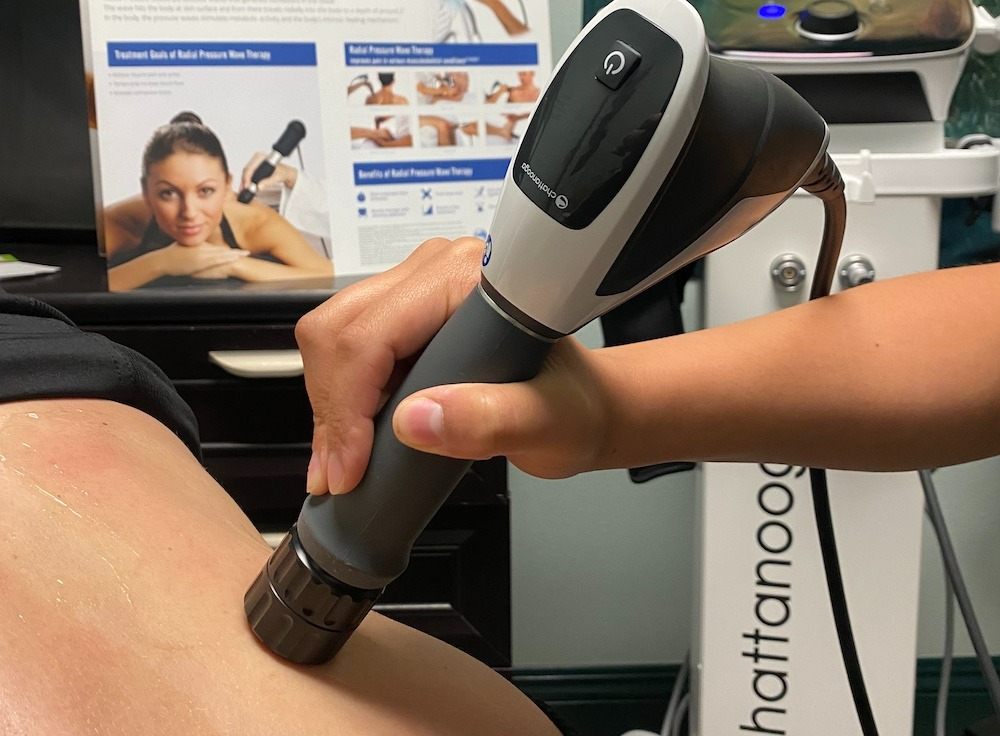
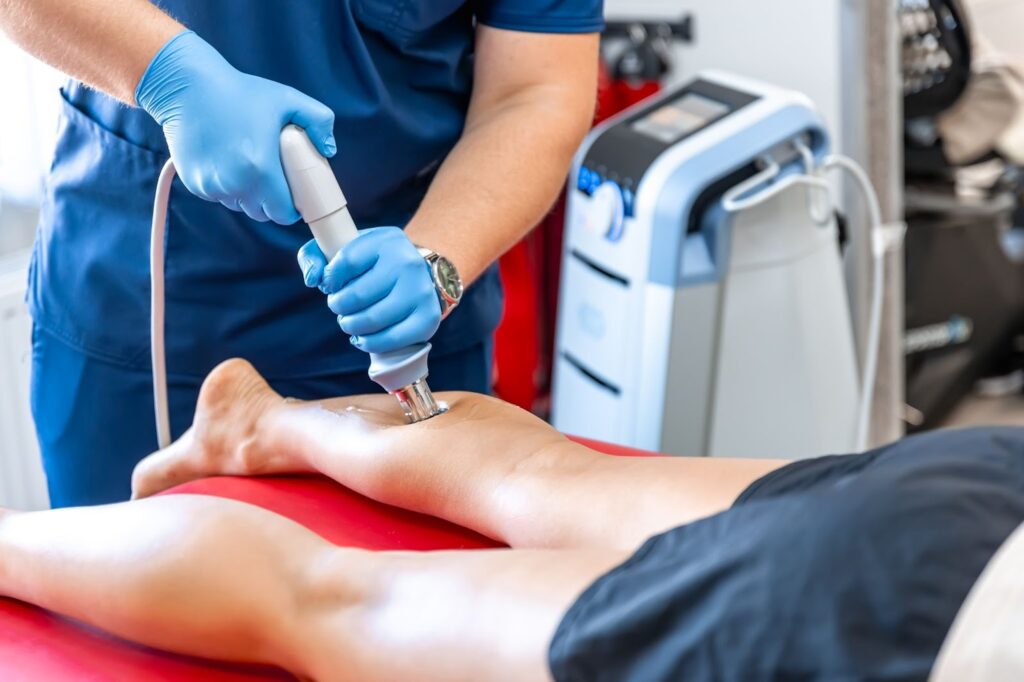
- Gel is applied to the treatment area, then the therapist moves the applicator over the injured zone while you provide feedback; energy levels can be adjusted accordingly.
- Minimal downtime: It’s non-invasive, no anaesthesia typically required, and you can often resume normal activities shortly after.
Comparison: SoftWave Therapy vs Shockwave Therapy
- Wave type & focus: Traditional shockwave often uses focused or radial waves (high energy at a point or superficial). SoftWave uses a broad-focused true shockwave across a wider area and deeper tissues.
- Coverage & depth: SoftWave can reach up to ~12 cm deep and treat tissue fields broadly, whereas radial or focused devices may have shallower depth and smaller treatment zones.
- Patient comfort & sessions: Because it covers a larger zone with each pass and is gentler in delivery, SoftWave may require fewer sessions and be better tolerated.
- SoftWave Therapy Benefits
SoftWave Therapy offers a range of benefits, particularly for those dealing with chronic pain, mobility issues, or tissue regeneration needs.
- Pain relief and inflammation reduction
- Many patients experience significant pain reduction from both acute and chronic conditions through SoftWave’s anti-inflammatory and analgesic effects.
- By reducing the pro-inflammatory immune response and lowering cell death (apoptosis), the therapy helps healing proceed more effectively.
b. Improved mobility and faster recovery
- Because SoftWave encourages tissue remodeling and restores function in tendons, muscles, and joints, mobility tends to improve.
- Non-invasive nature means less downtime compared to surgery or repeated injections.
c. Cell regeneration and improved blood circulation
- SoftWave stimulates angiogenesis (new blood vessels) and activates stem cells, which enhances regeneration of tissues such as nerves, cartilage, and muscle.
- Improved blood supply means a better healing environment for injured tissues.
Conditions treated:
- SoftWave Therapy for knees (knee pain, ligament/tendon injuries)
- SoftWave Therapy for face (skin tightening & collagen boost) — although caution: many devices used in aesthetics differ, always check indication.
- SoftWave for musculoskeletal injuries (tendinitis, plantar fasciitis, etc)
- Post-accident recovery and rehabilitation (e.g., after trauma, soft tissue damage)
3. Chiropractic SoftWave Therapy
What is SoftWave Chiropractic Therapy
Chiropractic SoftWave Therapy means that a chiropractor uses the SoftWave device (or similar shockwave/acoustic wave device) as part of their treatment plan — combining joint/spinal adjustment, soft tissue work, and the acoustic wave therapy.
Why chiropractors use SoftWave machines
- It allows them to treat not only joint and spinal misalignments, but also the underlying soft tissue injuries, scars, adhesions, tendons, ligaments.
- Since the therapy is non-invasive and rapid, it fits well into a chiropractic practice workflow.
- It can enhance treatment outcomes: For example, less pain → better spinal mobility → better adjustment outcomes.
Clinics offering chiropractic wave therapy
In Colorado, and particularly around Colorado Springs, you’ll find chiropractic clinics advertising SoftWave Therapy. For example, Colorado Injury & Wellness lists “Softwave” among their services.
How SoftWave Therapy supports spinal and joint healing
- By treating surrounding soft tissues (ligaments, fascia, muscle) spinal adjustments may hold better because tissues are less inflamed and more mobile.
- Joints that were restricted due to soft-tissue adhesions may open up faster when SoftWave improves tissue remodeling.
- After accidents (e.g., whiplash, sprains) SoftWave can accelerate soft-tissue healing, supporting joint/chiropractic outcomes.
4. SoftWave Therapy Providers
How to find SoftWave Therapy in Colorado Springs
A good place to start is the Colorado Injury & Wellness website, which lists SoftWave/TRT as one of their primary services at 1819 W Colorado Ave., Colorado Springs. They are a trusted option if you’re looking for experienced care from a chiropractor Colorado Springs, Colorado who specializes in SoftWave Therapy.
You can also explore directories of SoftWave Therapy providers in Colorado to find additional clinics offering this treatment. These directories help you compare services, check provider credentials, and choose the right chiropractor Colorado Springs, Colorado for your specific condition.
Tips for choosing a reliable SoftWave Therapy provider
- Check that the provider is licensed (chiropractor, physical therapist) and experienced with SoftWave or shockwave/acoustic-wave therapy.
- Ask about how many sessions they expect, what outcomes typically are, and whether they tailor protocol to your condition.
- Confirm the device/model: True broad-focused shockwave (SoftWave TRT) vs shallow radial devices — this matters for depth and area of treatment.
- Ask about combination treatments: Are they using SoftWave alone, or combining with chiropractic adjustments, rehab exercises, etc?
- Evaluate cost transparency, what happens if you don’t improve, and whether follow-ups / monitoring are included.
Importance of licensed chiropractors for effective treatment
Because the treatment involves precise delivery of acoustic waves to injured tissue and interpretation of how tissue is healing, a licensed chiropractor or physical therapist brings clinical judgment and complementary therapies (spine/joint care, rehab) which can optimise outcomes.
Average SoftWave Therapy cost per session
While exact figures vary by provider, some sources suggest SoftWave sessions cost somewhere in the mid-hundreds of dollars in the U.S. (for example introductory sessions shown at ~$79 in one clinic in Colorado).
Because cost is variable, always ask the provider.
Factors affecting cost (location, condition, treatment length)
- Geographic location (Colorado Springs vs larger metro)
- Extent and severity of condition (chronic vs acute)
- Number of sessions required (some conditions may need multiple treatments)
- Device type and provider expertise
- Whether other therapies are bundled (adjustments, rehab)
Comparison with traditional physiotherapy or injections
- Traditional physiotherapy might cost similar per session but may require many more sessions to achieve similar outcomes.
- Injections (e.g., corticosteroid) might cost less initially, but carry risks and may not offer the regenerative benefits SoftWave claims (blood flow, stem-cell activation).
- SoftWave is often marketed as a “non-surgical, non-medication” alternative which might reduce overall long-term cost if it prevents surgery.
Insurance coverage and payment options
- Many clinics report that SoftWave is not always covered by insurance or only under certain conditions.
- Some patients use health-savings accounts (HSA) or flexible spending accounts (FSA) to pay.
- Always confirm with your insurer and the clinic whether the treatment is covered or considered “out-of-pocket”.
5. SoftWave Therapy Side Effects
Common and temporary side effects (mild soreness, redness)
- As noted in FAQs: SoftWave is generally well tolerated; most common side effects are temporary redness, mild soreness or swelling in the treated area.
- Because it is non‐invasive and doesn’t rely on drugs, the risk of systemic side-effects is low.
Safety considerations and contraindications
- Although the therapy is safe when administered by trained professionals, people with certain conditions (e.g., uncontrolled bleeding disorders, certain cardiac devices, pregnant women) may need to avoid or modify treatment.
- Also, evidence is still emerging for some uses; it should be one part of a broader treatment plan.
When to avoid SoftWave Therapy
- If you have an infection in the target area, or an implanted device that may interact with shockwaves — check with the provider.
- If you are expecting immediate complete healing for very advanced degenerative conditions without other therapies — SoftWave is not a guaranteed cure but a tool to support healing.
- If the provider uses a device that is simply “radial wave” or not a true shockwave and promises unrealistic outcomes — do your homework.
6. SoftWave Therapy Machines
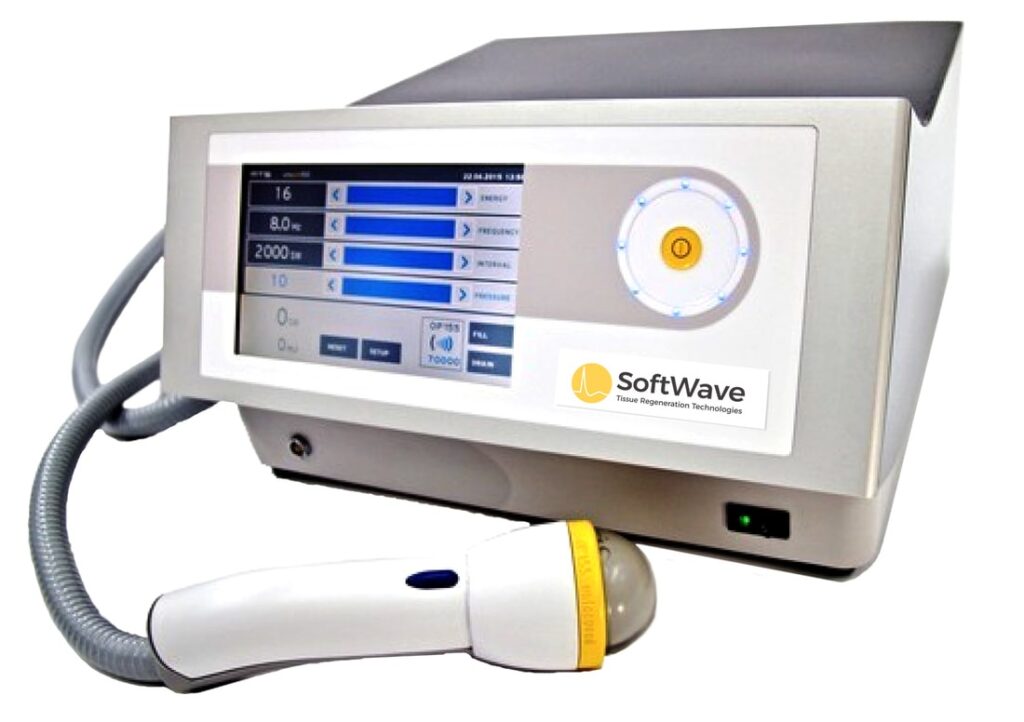
Caption: SoftWave Therapy device featuring a broad-focused shockwave applicator used for pain relief and tissue regeneration treatments.
Overview of SoftWave Therapy machines
- The brand SoftWave® (by Tissue Regeneration Technologies, TRT) uses an electro-hydraulic “spark” to generate true shockwaves that are broad-focused and designed to penetrate deep tissue.
- These devices use a closed‐loop water system, patented parabolic reflector applicator, and cover both shallow and deep tissues.
Difference between clinical and home-use devices
- Clinical devices (like SoftWave TRT) are high‐powered, designed for professional use, and require training and certification.
Home-use devices (often radial wave or lower‐energy devices) may claim benefits but typically lack the depth and evidence of clinical shockwave therapy. Indeed, some sources caution that shockwave/home-devices may be over-promised.
SoftWave Therapy machine cost
- Clinics that purchase SoftWave machines invest in a professional asset; costs vary widely depending on model, financing, and clinic size.
Because of the high cost, you’ll often find big clinics or practices offering the service rather than individual practitioners.
SoftWave Therapy machines for sale for clinics
- Yes — SoftWave provides device options for practices, with tailored models depending on volume and budget.
- If you’re a clinic leaning into regenerative therapies, investing in a SoftWave device might be part of your growth plan.
Why Choose SoftWave Therapy?
- Proven results for pain relief and faster healing: Many clinics report high patient-satisfaction rates and faster return to activity.
- Chiropractor-led treatments for long-term recovery: When SoftWave is combined with chiropractic care (joint/spinal adjustments, rehab), you get a more holistic path to recovery rather than just masking symptoms.
- Safe, non-invasive, and effective care: No surgery, no major downtime, minimal risk. SoftWave gives an alternative for those seeking regenerative/non-drug options.
Broad-focused technology means fewer sessions and possibly better outcomes compared to older shockwave devices.
About SoftWave Therapy by Colorado Injury & Wellness
At Colorado Injury & Wellness, located at 1819 W Colorado Ave., Colorado Springs, CO 80904, the team offers SoftWave Therapy as part of their services including auto injury care, chiropractic adjustments, laser therapy, shockwave therapy, etc.
Whether you’re dealing with knee pain, back pain, shoulder injuries, or other musculoskeletal issues, you can inquire about SoftWave Therapy to complement your treatment plan. The clinic emphasises “Repair, remodel and regenerate tissues; Accelerate wound healing; … Reduce acute and chronic pain.”
Conclusion
In summary, SoftWave Therapy in Colorado Springs offers a promising, non-invasive option for pain relief, tissue regeneration, and improved mobility — especially when delivered by a chiropractic-led clinic like Colorado Injury & Wellness. It leverages advanced acoustic shockwave technology, supports healing at the cellular level, and provides a safe alternative to injections or surgery. If you’re looking for a faster, more effective recovery path for your musculoskeletal condition, consider booking a SoftWave Therapy consultation today for a faster, pain-free recovery.
Book your SoftWave Therapy consultation today for a faster, pain-free recovery.
FAQs About SoftWave Therapy
Question 1: Who provides SoftWave Therapy near me?
Providers include chiropractors, physical therapists, and regenerative medicine clinics in Colorado Springs and the broader Colorado region. For example, Colorado Injury & Wellness is one such provider.
Question 2: How many SoftWave sessions do I need?
It depends on the condition, severity, and how your body responds. Many patients notice improvements after 1-3 sessions, with results building over several weeks.
Question 3: Is SoftWave Therapy safe for facial treatments?
Some clinics advertise SoftWave or similar technologies for skin tightening or collagen-boosting facial treatments. While the underlying technology can support soft tissue remodeling, you should ensure the provider is experienced in aesthetic use and that the device is cleared for that indication.
Question 4: How is SoftWave different from TRT or shockwave therapy?
“TRT” stands for Tissue Regeneration Technologies — the manufacturer of SoftWave®. So “SoftWave TRT” refers to the same broad-focused shockwave technology. Compared to standard “shockwave therapy”, SoftWave uses broader, deeper, more efficient delivery of energy.
Question 5: Does insurance cover SoftWave Therapy?
Often no, or only partially. Many providers note that insurance may not cover the therapy because it may be considered “investigational” for some indications. Patients often pay out-of-pocket or use HSA/FSA funds.