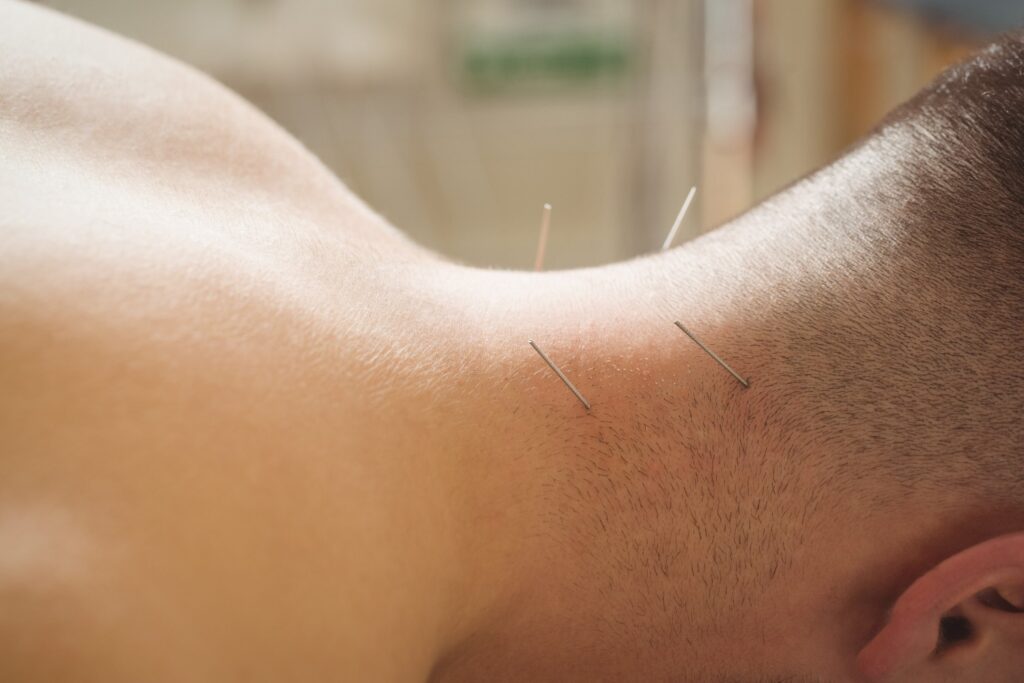

What Is Dry Needling?
Dry needling is a modern Western medical technique used to relieve muscle pain, stiffness, and movement dysfunction. It involves inserting thin, solid needles directly into myofascial trigger points — small, tight knots deep in the muscle that can cause pain and limit motion. The goal is to release muscle tension, increase blood flow, and help improve movement.
Dry needling is often performed by physical therapists, chiropractors, or trained medical professionals as part of a larger rehabilitative plan aimed at pain reduction and restoring normal muscle function.
What Is Acupuncture?
Acupuncture is one of the core practices of Traditional Chinese Medicine (TCM) and has been used for thousands of years. It uses similar thin needles but places them in specific points along the body’s meridians — channels that TCM says help regulate the flow of qi (energy). The idea is that balancing this energy can improve overall health and relieve a wide range of symptoms, not just muscle pain.
While many people try acupuncture for pain relief, it’s also commonly used for issues like stress, digestive complaints, and sleep problems.
Dry Needling Vs Acupuncture: Key Differences
Here’s how the two therapies differ:
1. Origins and Philosophy
- Dry Needling is rooted in Western anatomy and neurophysiology, with a focus on diagnosing and treating muscle dysfunction.
- Acupuncture comes from Traditional Chinese Medicine and focuses on restoring the body’s energy balance.
2. Treatment Focus
- Dry needling targets specific trigger points that are known to cause pain and movement limitations.
- Acupuncture targets established acupuncture points along meridians to support holistic health.
3. Needle Placement and Technique
- Dry needling uses fewer needles placed directly into muscle knots or dysfunction areas.
- Acupuncture may use more needles across the body, not just where pain occurs, with the intent of influencing energy flow and systemic balance.
4. Training and Practitioners
- Dry needling is typically performed by physical therapists, chiropractors, or medical doctors trained in neuromuscular assessment and trigger-point therapy.
- Acupuncture is most often delivered by licensed acupuncturists trained in TCM theory and practice.
What Are the Benefits of Each?
Dry Needling
Because dry needling focuses on specific muscle issues, it may help with:
✅ Neck and back pain
✅ Muscle tightness and spasms
✅ Sports injuries
✅ Increasing range of motion
These results often come faster in targeted areas because the needle is directly addressing muscle dysfunction.
Acupuncture
Acupuncture may help not only with pain but also with:
✨ Stress and anxiety
✨ Digestive health
✨ Sleep problems
✨ Fatigue
✨ Certain chronic health issues
Because acupuncture works systemically through TCM principles, its effects are often experienced more broadly than muscle-specific therapies.
Similarities Between Dry Needling and Acupuncture
While the principles behind them are different, both therapies share a few things:
🔹 They use fine, sterile needles.
🔹 Both are generally considered safe when performed by trained professionals.
🔹 Mild soreness, bruising, or slight bleeding after sessions are common with both treatments and usually temporary.
Is One Better Than the Other?
There’s no single answer — it depends on your goals:
❤️ Choose Dry Needling if you want fast relief from muscle pain and tightness, especially related to movement or injury.
🌿 Choose Acupuncture if you’re seeking holistic support for broader health concerns, including stress or chronic symptoms.
Some patients even benefit from both therapies in an integrative care plan, depending on their needs.
Risks and Safety
Both treatments are very safe when provided by qualified clinicians. However:
⚠ Dry needling can cause temporary soreness or muscle twitching and, in rare cases, more serious issues if performed incorrectly — so proper training matters.
⚠ Acupuncture also carries low risk for minor bleeding or bruising, but serious complications are rare when done by a trained acupuncturist.
Always consult with your clinician before starting any needling therapy — especially if you have a bleeding disorder, are pregnant, or have other underlying health conditions.
How We Help at Colorado Injury & Wellness
At Colorado Injury & Wellness, Dr. Austin Clarke provides personalized care to help you decide which therapy — dry needling or acupuncture — fits your goals and condition best. With a focus on evidence-based treatment and compassionate care, you’ll get hands-on guidance tailored to you.
📍 Visit us at: 1819 W Colorado Ave, Colorado Springs, CO 80904
📞 Call: +1 719-471-4174
Whether you’re dealing with tight muscles or complex pain patterns, we’re here to help you move better and feel your best.
Frequently Asked Questions (FAQ)
1. Is Dry Needling The Same As Acupuncture?
No, dry needling and acupuncture are not the same treatment. While both use thin needles, dry needling is based on Western medical principles and targets muscle trigger points to relieve pain and improve movement. Acupuncture is rooted in Traditional Chinese Medicine and focuses on balancing the body’s energy flow through meridian points.
2. Is Dry Needling More Painful Than Acupuncture?
Some patients report that dry needling can cause a brief muscle twitch or mild soreness because it directly targets tight muscle knots. Acupuncture is often described as more relaxing, with minimal discomfort. However, pain tolerance varies from person to person.
3. What Conditions Does Dry Needling Treat?
Dry needling is commonly used for:
- Neck and back pain
- Shoulder pain
- Muscle tightness and spasms
- Sports injuries
- Limited range of motion
It is particularly effective for musculoskeletal conditions related to trigger points.
4. What Conditions Does Acupuncture Treat?
Acupuncture may be used for:
It is often chosen for both pain relief and broader wellness support.
5. How Many Sessions Are Needed?
The number of sessions depends on the condition being treated, its severity, and how your body responds. Some patients notice improvement after one or two sessions, while chronic conditions may require a longer treatment plan. A personalized evaluation with Dr. Austin Clarke can help determine what’s right for you.
6. Are Dry Needling And Acupuncture Safe?
Yes, both treatments are generally safe when performed by trained and licensed professionals. Mild soreness, bruising, or slight bleeding can occur but usually resolves quickly. Choosing a qualified provider is essential for safety.
7. Can You Combine Dry Needling And Acupuncture?
In some cases, patients may benefit from both therapies as part of a comprehensive care plan. The best approach depends on your symptoms and overall health goals. A professional consultation can help determine the most effective treatment strategy.
8. Which treatment should I choose: Dry Needling Vs Acupuncture?
If your primary goal is relief from muscle pain, tightness, or sports injuries, dry needling may be ideal. If you are seeking holistic treatment for stress, chronic conditions, or overall wellness, acupuncture may be a better fit.
At Colorado Injury & Wellness, we help patients understand their options and choose the treatment that aligns best with their needs.
📍 1819 W Colorado Ave, Colorado Springs, CO 80904
📞 +1 719-471-4174